
The Kids Have Nowhere to Shop
Preteen clothing is virtually extinct, and the average wardrobe of a 12-year-old now consists solely of Lululemon and Zara.
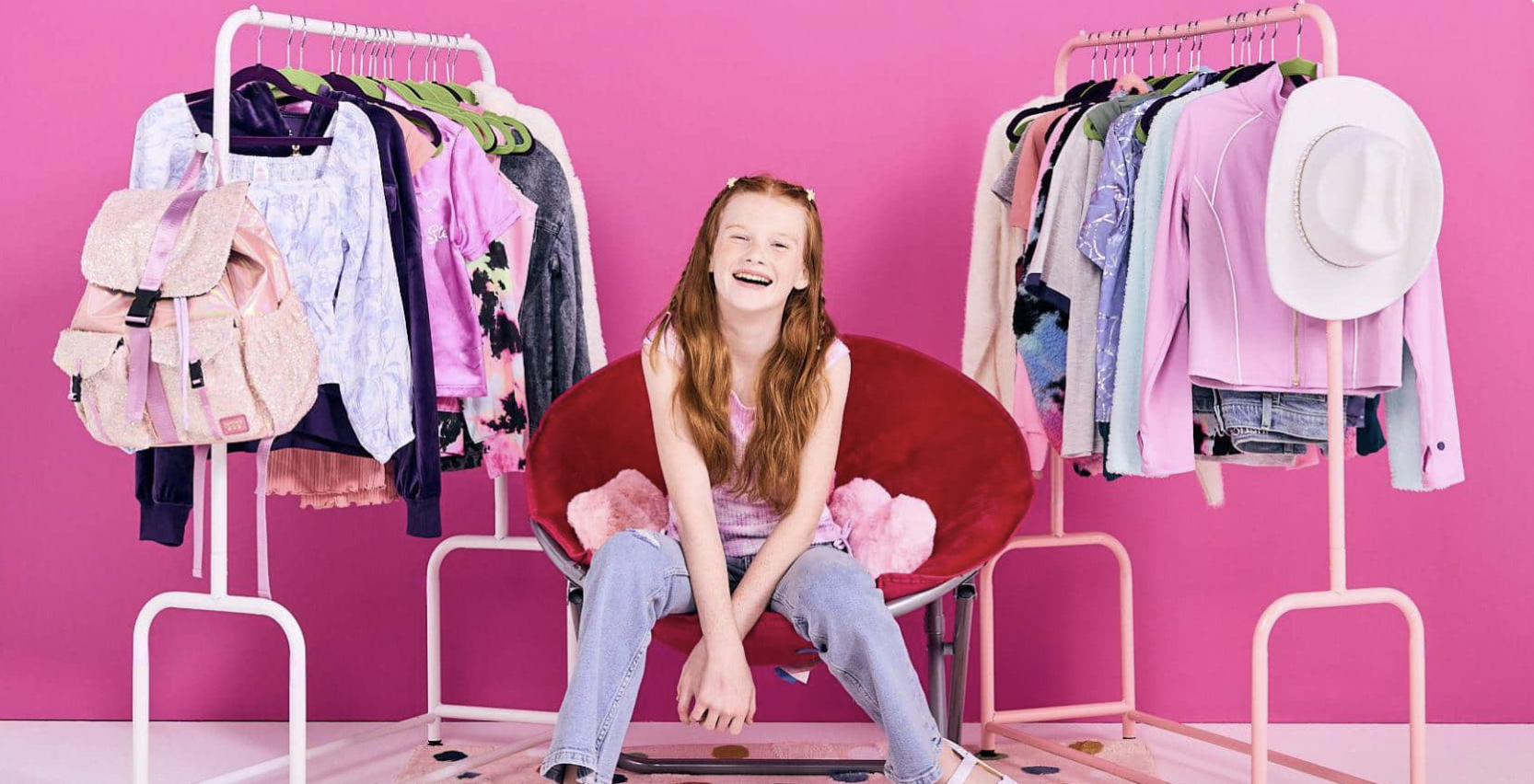
Source: Justice
Like many young girls, I used to have “fashion shows” for my dad and sister, getting home from the mall, and immediately putting on my new reverse-sequin t-shirts and floral-embroidered jeans and strutting down the hallway. The “couture” for my age bracket—circa 2010—was stores like Justice. My fashion addiction started in that suffocating, pink, and sparkly explosion of a store, and has persisted ever since.
It was a shock to learn that this extravagance has died.
As my grandmother returned from a shopping trip with my young cousins, I was quite taken aback to hear that their chosen itinerary consisted of Lululemon, PINK by Victoria's Secret, and Sephora.
This realization gave way to consideration as I began to think: “Where could these tweens shop?” Preteen fashion has quietly slipped into irrelevance, leaving these girls with practically no choice but to age up and take their business to women’s stores.
Justice didn't survive COVID, closing all brick-and-mortar stores in the summer of 2020. They now sell their designs at Walmart. Over the past 10 years, we have witnessed the downfall of tween culture as a whole.
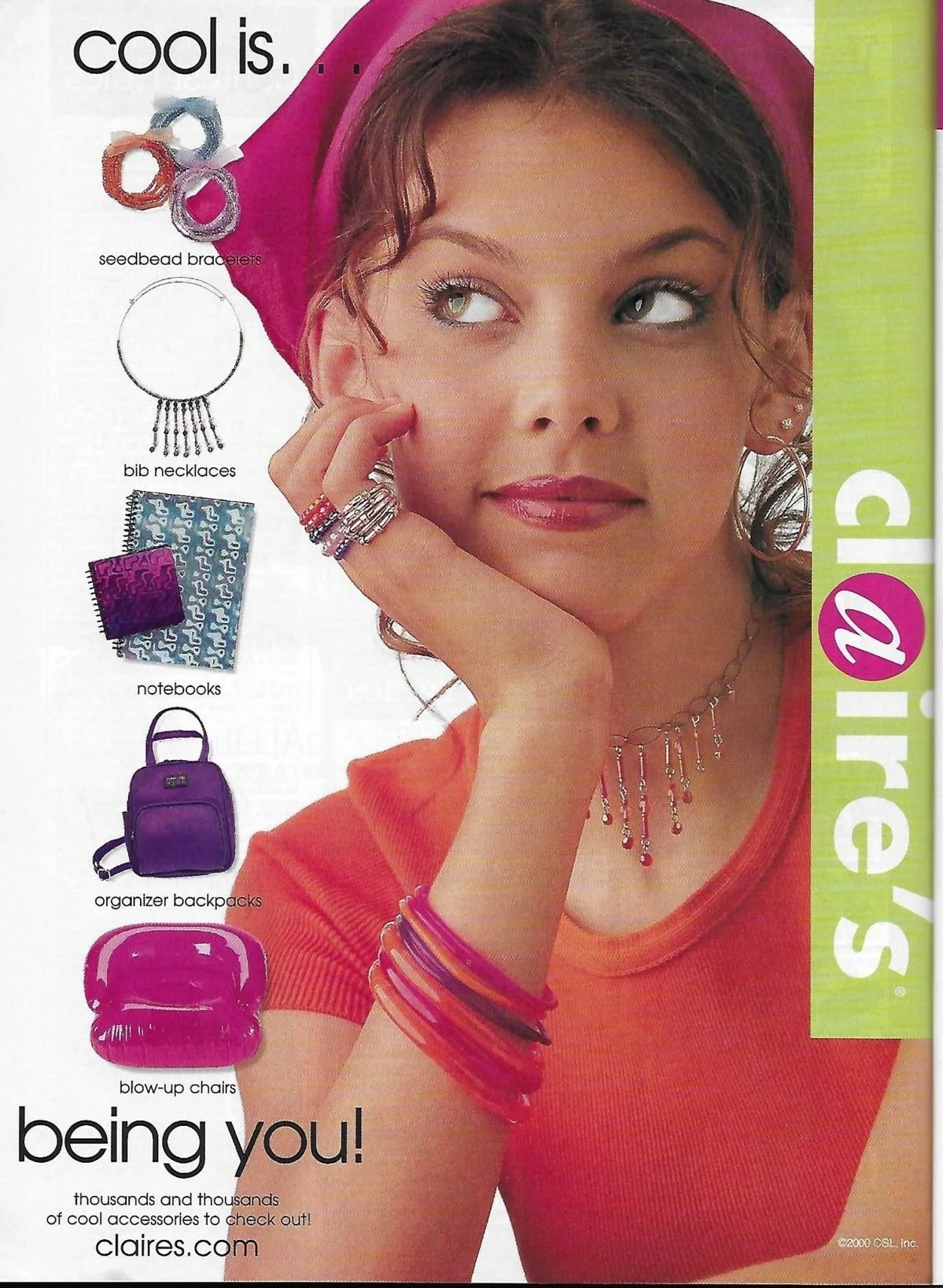
Credit: Claire's
Stephanie, a mother of two, has both a 13-year-old daughter and a 20-year-old daughter. She has seen this progression in real time.
“Everything used to be so much simpler,” she said. “With my oldest, it could just be anything from Justice or Claire's, and I would pick out her outfits the majority of the time.”
Now, Stephanie emphasizes how everything has to be on-trend. An Edikted sweatshirt is a status symbol, and a Kendra Scott necklace is the crown jewel.
There used to be a clear progression in clothing as one aged– starting in the kids section, aging into preteen/tween styles, transitioning into teen and juniors, and finally shopping for adult fashion. Now, that line is blurred.
This extinction can be attributed in part to the American culture’s desire for little girls to grow up faster than they should.
We can see this across several different industries. Take the “Sephora 10-year-old” phenomenon. Retinol is flying off the shelves and into the hands of girls as young as 15.
“My youngest is obsessed with Sephora,” Stephanie said. “Honestly, I don’t even buy my own beauty products anymore, I just borrow hers. She has half the store in her vanity anyway.”
Research from Circana showed that, in the first half of 2024, when the trend began, households with tweens and teens accounted for a third of "prestige” beauty sales.
Brands fed into this as a marketing strategy, and the cycle continues.
Brands like Lululemon and H&M see the attention they are getting from a younger audience, and market accordingly. Girls are influenced by advertisements and brand media to make their purchases.
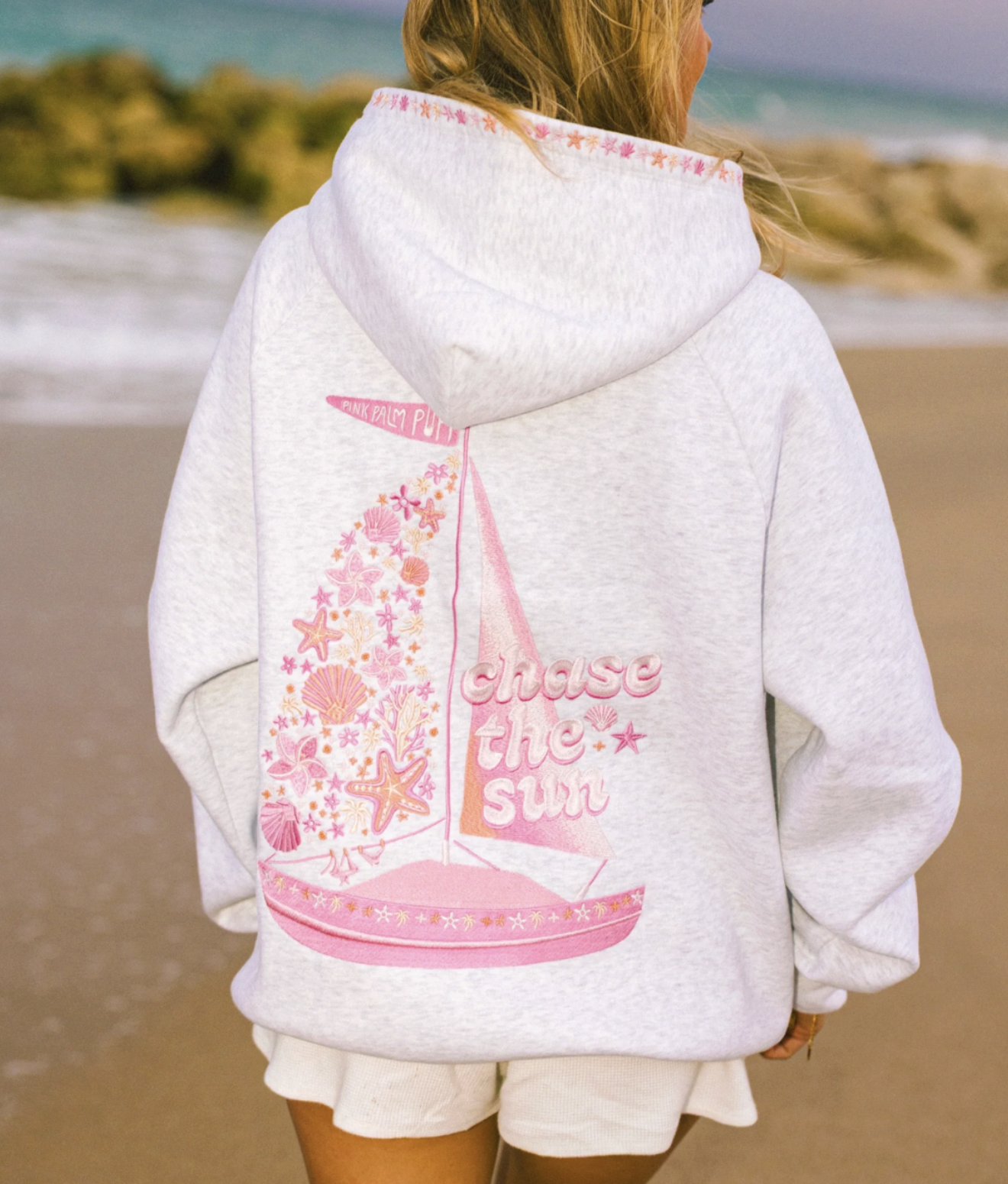
Credit: Pink Palm Puff
A huge factor in this dynamic shift is both social media and peers. Finley, a 13-year-old from Connecticut, like many other tween girls, describes her style as “preppy.” As she makes her way home from school, she dons a pair of white sweatpants and a pastel hoodie from Pink Palm Puff.
“I think my top four [brands] are Brandy Melville, Hollister, Pacsun, and Lululemon,” Finley said.
The internet molds young girls into who they are. They want to be older and mature, and copy the likes of their favorite influencers. When everyone has the same style icons, there are bound to be similarities in their wardrobes.
“My friends and I all dress the same,” she said.
Finley takes to Pinterest and Instagram to see what other people are wearing, but she doesn’t fall for every trend.
On the contrary, Penelope, a 20-year-old fashion student at LIM, has worked on both sides of the spectrum at both CottonOn Kids and Alo.
Penelope has worked firsthand with these tweens and has seen the popularization of athleisure in this age bracket specifically.
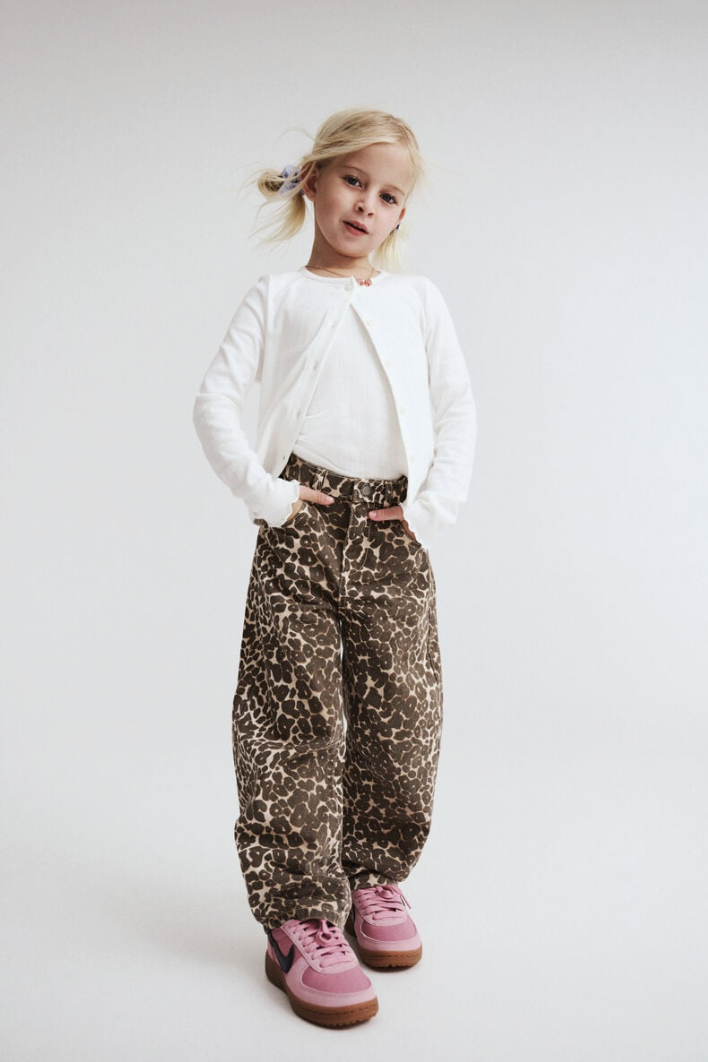
Credit: CottonOn Kids
Penelope recalls seeing unsupervised pre-teens and teens at Alo.
“They would come in alone or with a small group and look around the store,” She said. “Sweatsuits [and workout sets] were really popular with the kids, too.”
Although tweens may take a liking to these styles, they weren’t made with their demographic in mind.
“The smallest size we carried was a xxs,” says Penelope. “Even that sometimes wouldn’t fit them, so they would leave empty-handed.”
CottonOn Kids wasn’t equipped for this age bracket either. Penelope notes that preteens would come in looking for anything that would fit them.
Preteens like Finley are doing their best to navigate a world of fashion that excludes them. This generation of kids has been forced to conform to unrealistic beauty and maturity standards set by social media and American culture, consciously or otherwise, and it shows. Research done by The Dove Self-Esteem Project concluded that only a mere 11% of girls would call themselves beautiful.
Additionally, it’s no secret that kids can be cruel. Bullying still exists online and offline. With girls, especially, there is a certain pettiness and pressure to fit the mold and dress like the people around you. Any uniqueness will render you an outcast.
It is important when discussing this matter not to place blame on our youth, as the fashion industry and American culture are making it nearly impossible for them to express themselves in an age-appropriate way. The kids have no other option. Lululemon and Zara are the new Justice for preteens.
We as a society have jumped ship on our preteens. Not only do they have nowhere to shop, but they have no appropriate media to watch, no products branded towards them, and no spaces suitable for their age bracket.
So the next time you go to judge the Lululemon-clad 13-year-old scrolling Instagram Reels, remember that there is more to the story.