Infiltrating The Underground NYC Art Community One Beer At A Time
*Article from Lexington Line Spring/Summer 2026 Issue, pages 66-69
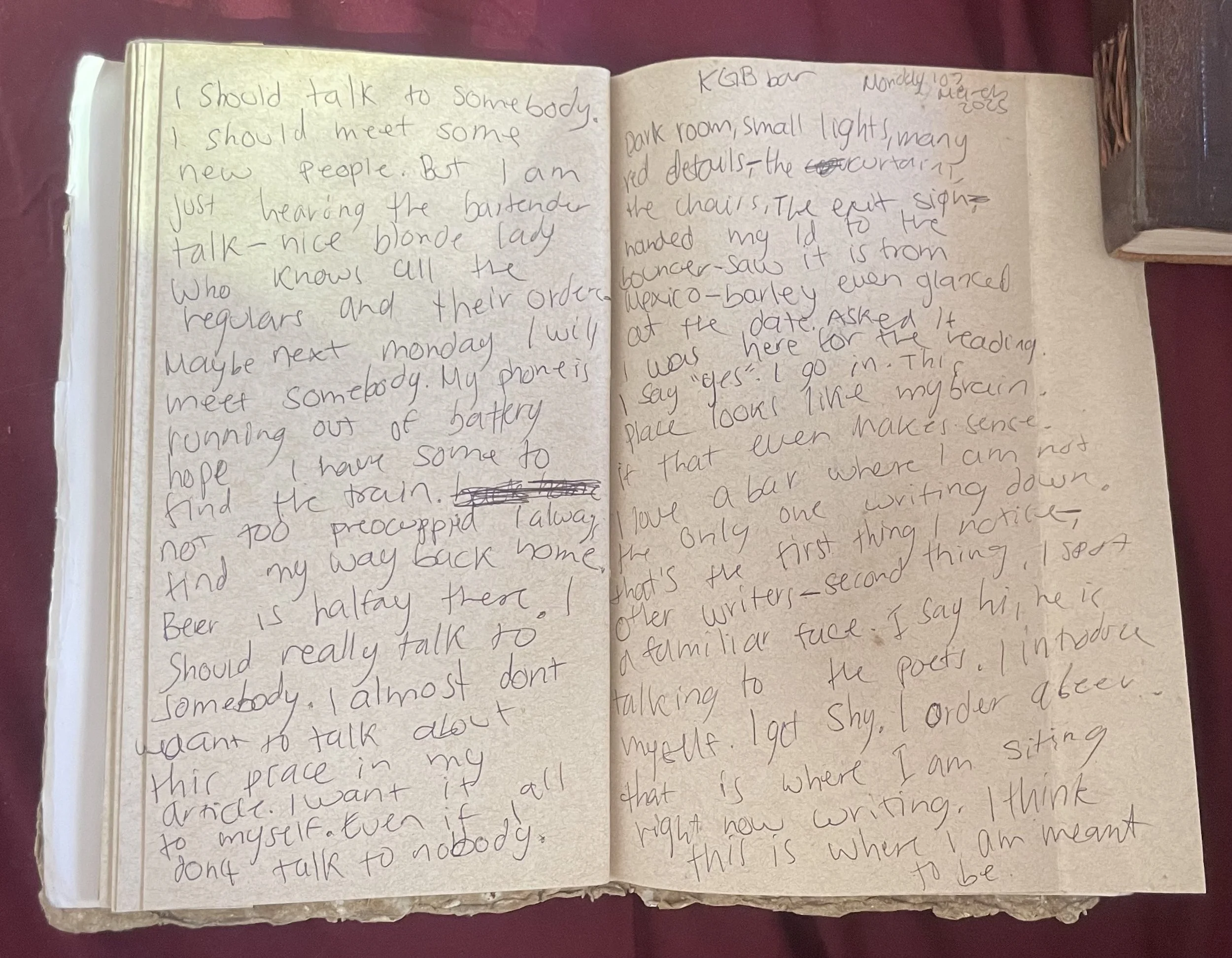
Dark room, small lights, many red details—the curtains, the chairs, the exit sign—I hand my id to the bouncer—he sees that it’s from Mexico—barely even glances at the date. Asks if I was here for the reading, I say “yes.” I go in.
This place looks like my brain, if that even makes sense. I love a bar where I am not the only one writing. That is the first thing I notice—other writers—second thing I notice: a familiar face. I say hi, he is talking to the poets. I introduce myself. I get shy. I order a beer. That is where I am right now. Writing. I think, “this is where I am meant to be.” I should talk to someone.
I should really meet some new people. But I am just hearing the bartender talk—nice blonde lady, who knows all the regulars and their drinks. Maybe next Monday I will meet somebody. My phone is running out of battery, I hope I have some left to find the train. I am not too preoccupied, I always find my way back home. Beer is halfway gone. I should really talk to someone. I almost don’t want to write about this place in my article. I want it all to myself.
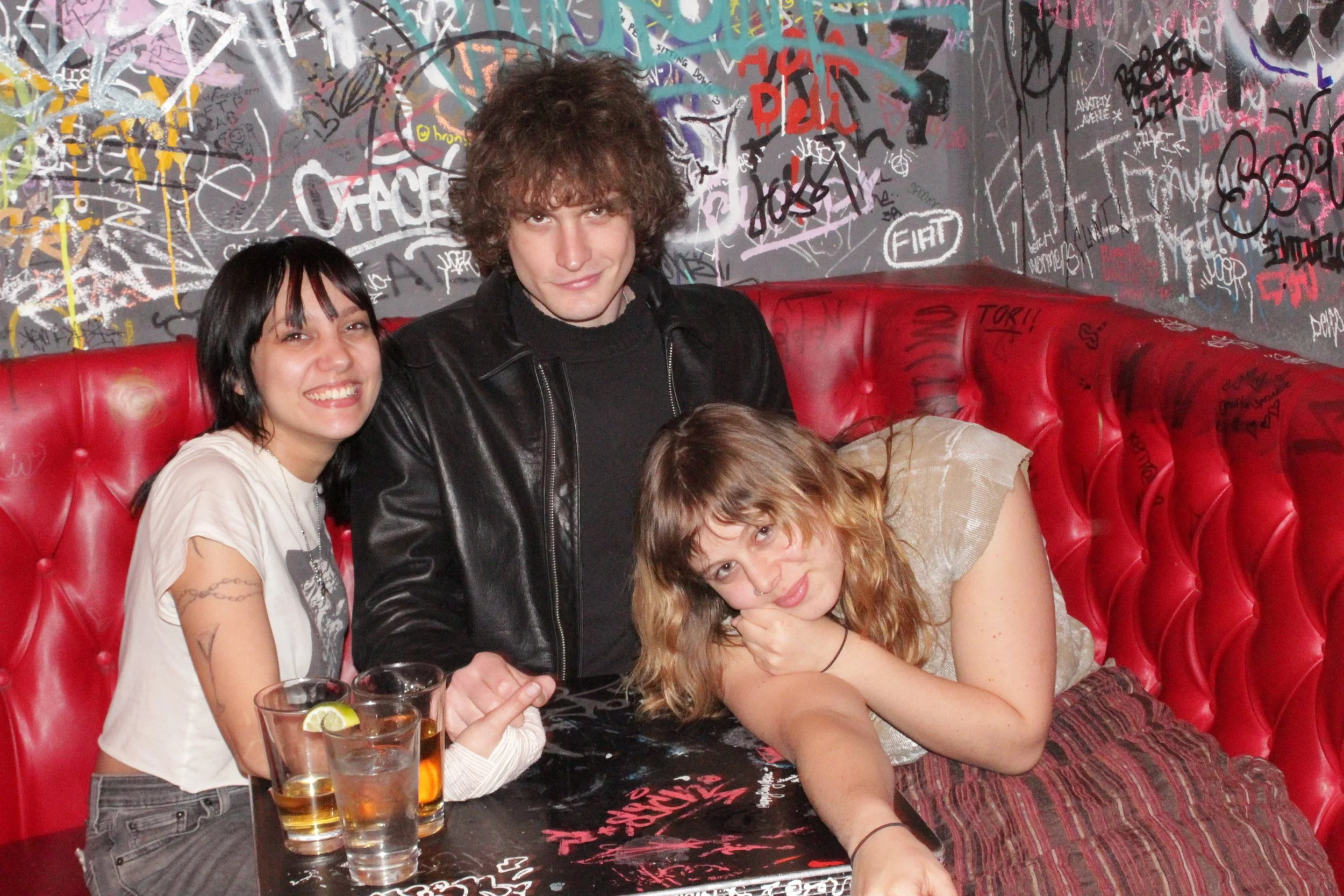
Alexa, Australian guy, and me at Double Down Saloon
Source: Caro Barrenechea Cobos
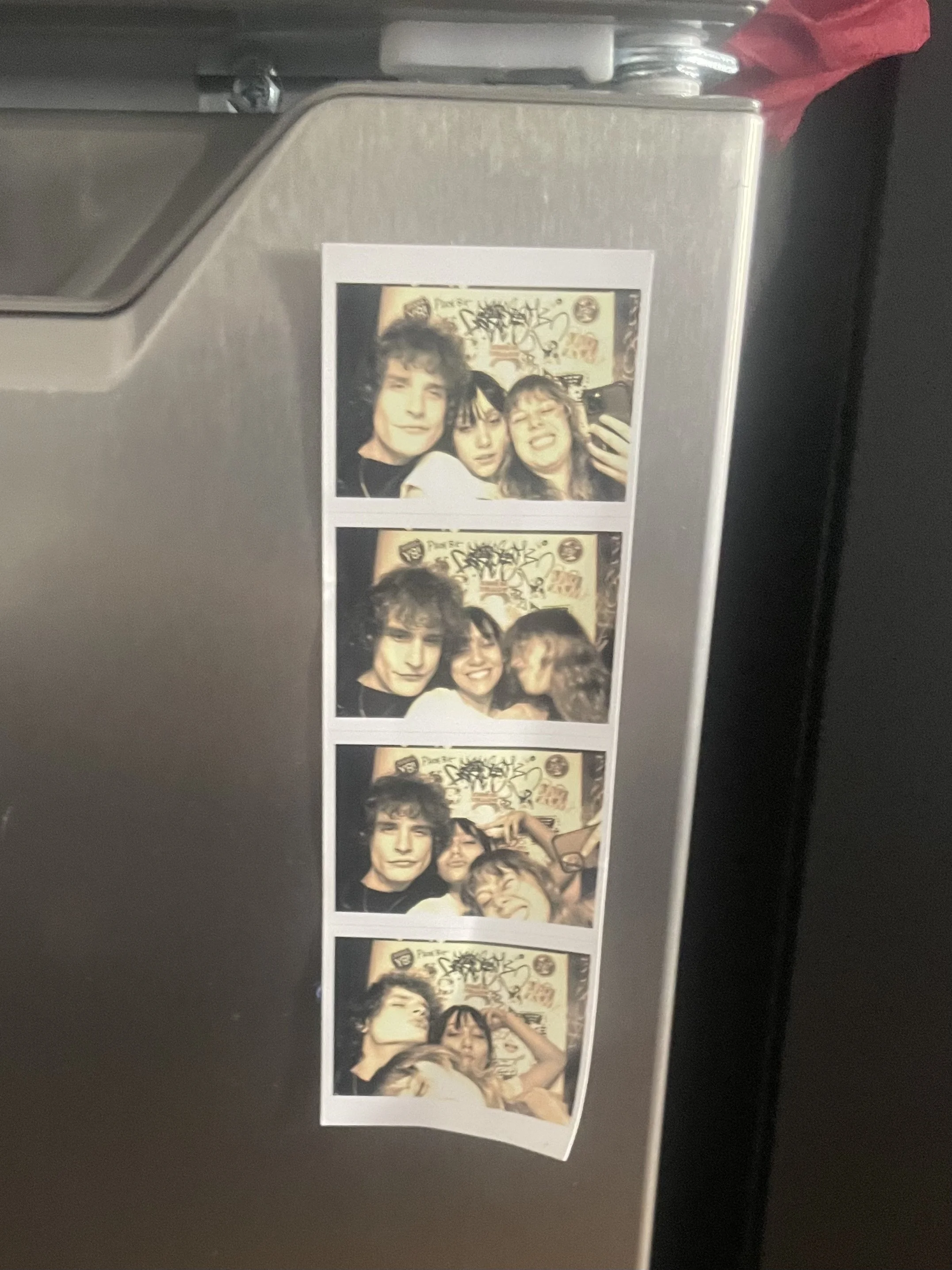
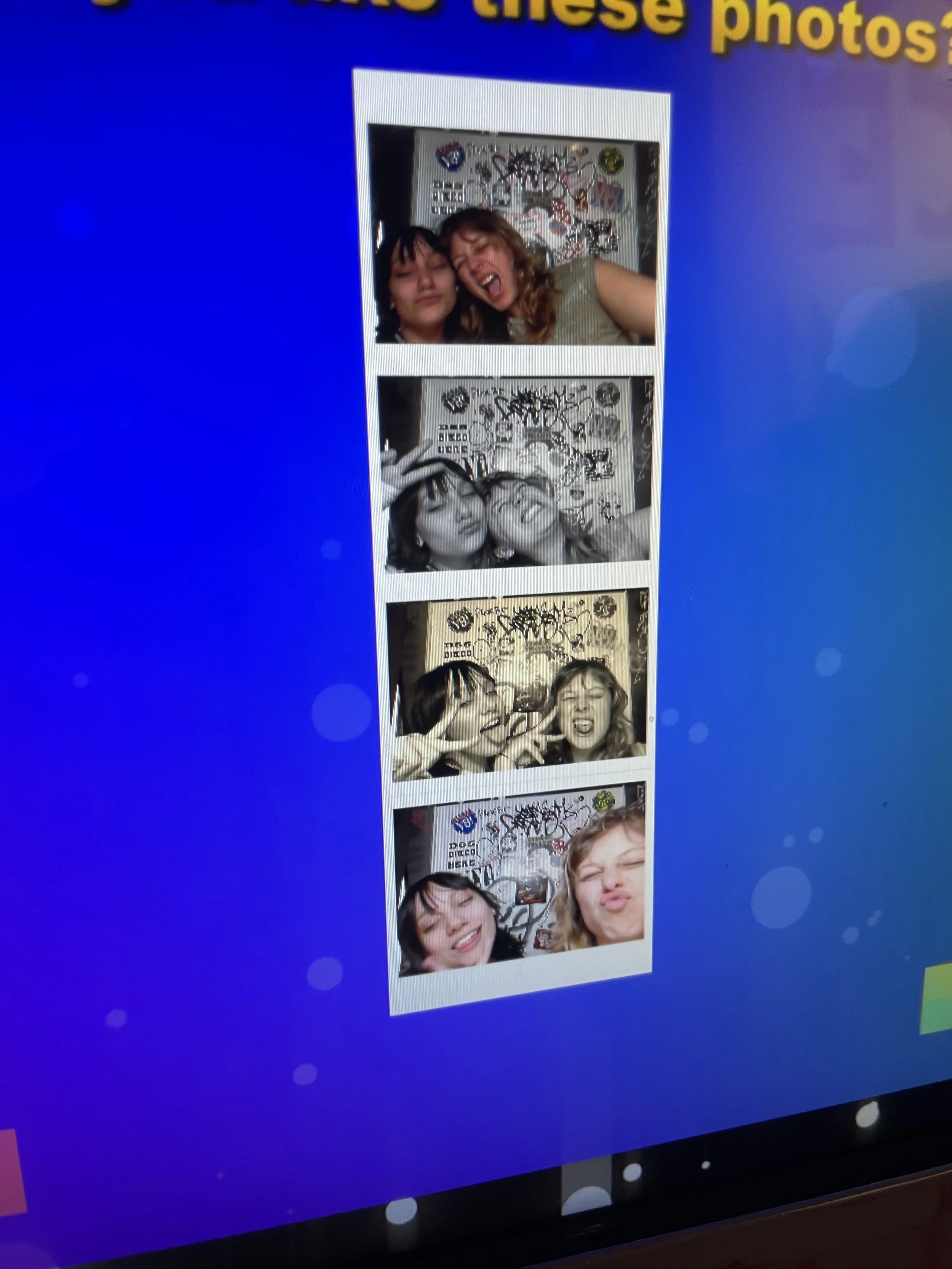
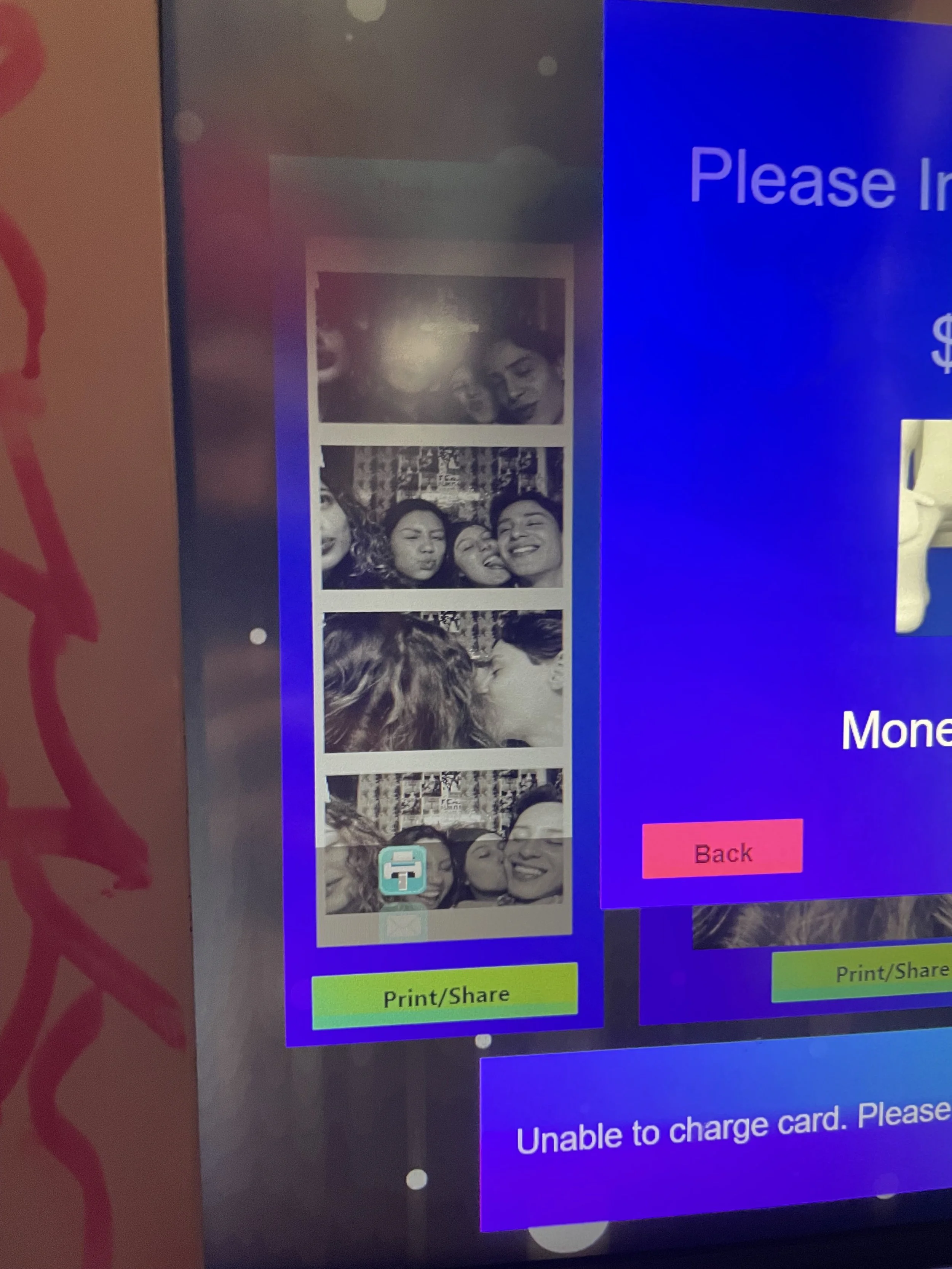
I wrote that paragraph in my journal at my first poetry night at KGB Bar, a literary haunt in Manhattan’s East Village. I did eventually meet someone that night, a Mexican girl named Alexa. After the reading, Alexa and I decided to try another bar around the corner. There, we met an Australian guy who turned out to be a member of five bands. We played a few rounds of pool, got prints at the photobooth, and smoked with strangers outside.
Then, in a spur-of-the-moment—which would later earn me a sermon from my friends about stranger danger and my easiness to trust people—I invited them back to my place. We listened to my CD player all night while we drank cheap wine, and at 6 a.m., they went home and I went to bed. The next morning, however, I couldn’t stop thinking “wow, how cool is my life?”
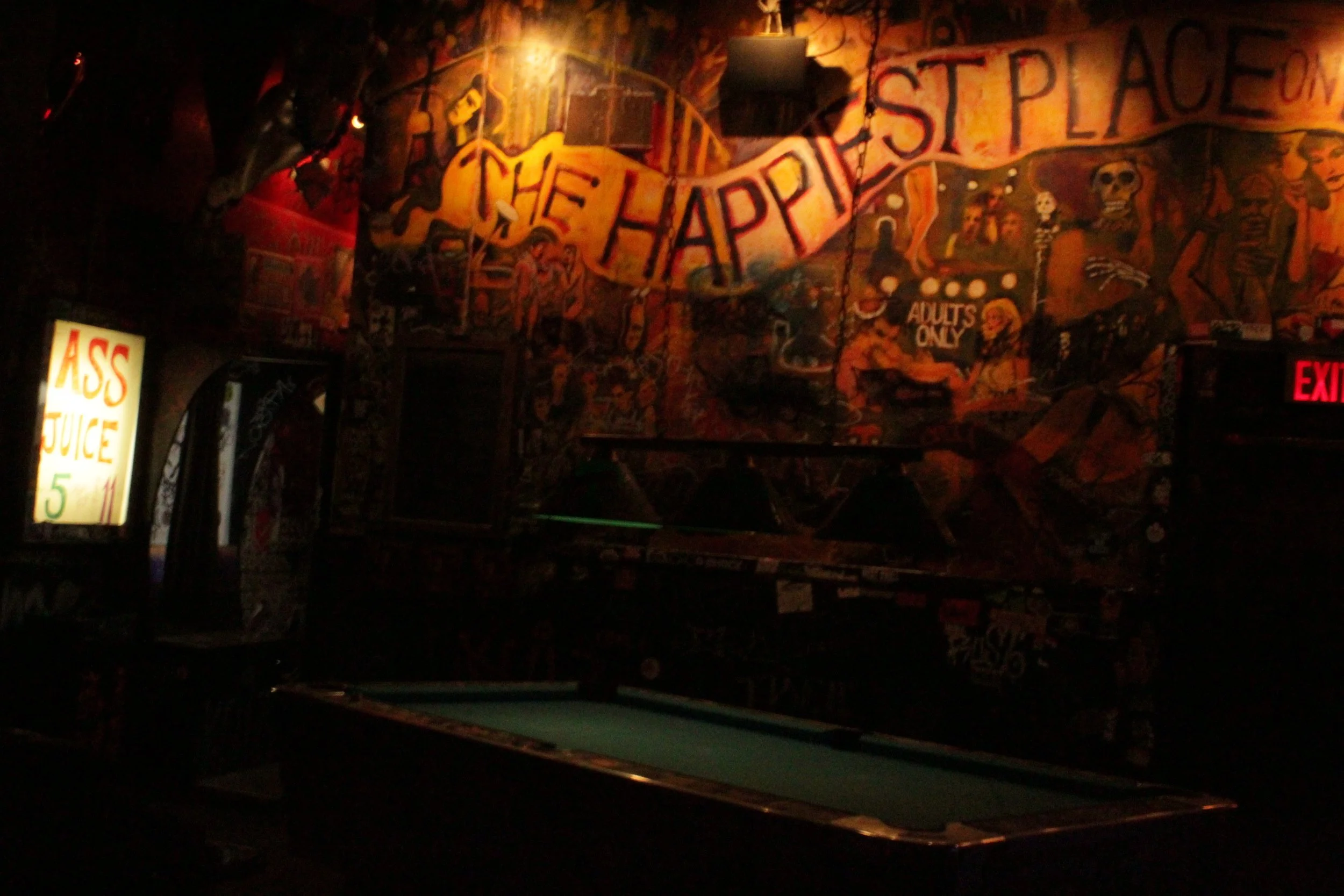
Double Down Saloon Pool Table
Source: Caro Barrenechea Cobos
Ever since that night, I have been dwelling on the 1900s culture of “artists’ salons,” where artists from different disciplines would get together to share their current work or ideas about the world.
Natalie Barney, for example, hosted literary salons for 60 years at her home in Paris beginning in 1909. Dorothy Wilde biographer Joan Schenkar called it “the most subversive literary salon that ever existed.” Barney hosted some of the most renowned artists and writers of the 20th century, including Djuna Barnes, Gertrude Stein, Ernest Hemingway, Claude Debussy, and Isadora Duncan.
Even though the concept is not as popular anymore, I believe the practice is still alive today with a modern twist to it.
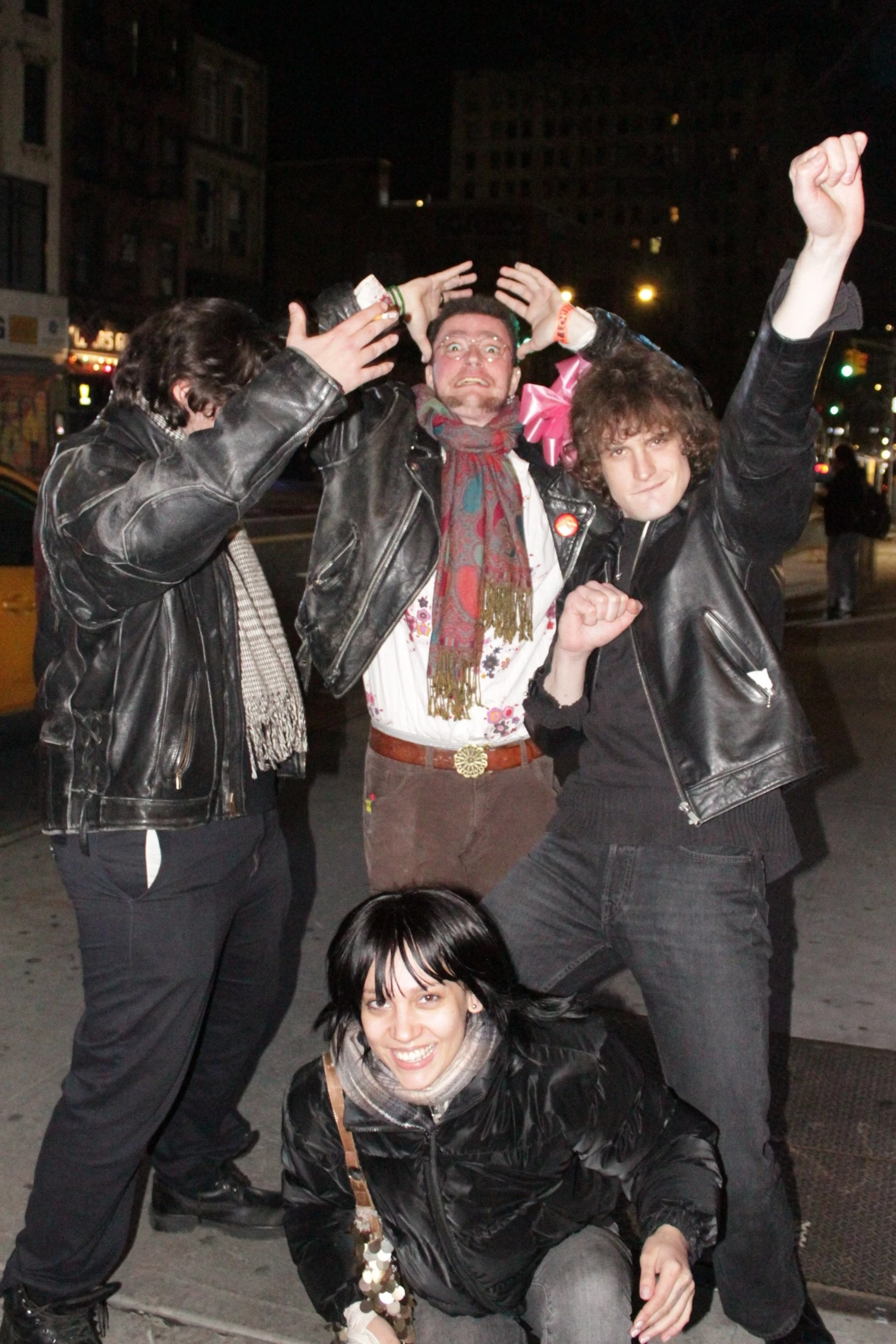
NYC band, smoke break outside the bar
Source: Caro Barrenechea Cobos
This month, I am forcing myself to leave the comfort of my new black leather couch and visit different salons and bars around New York City to find the places where artists build community.
It is a Wednesday night, and I am done with classes for this week. I head to Queens to watch poet Brooke Finegold’s solo show at Q.E.D. Astoria. Selected as the #1 comedy space in NYC by Time Out, Q.E.D. is a women-owned art space that hosts 100+ events per month. From open mics to movie nights, their goal is to turn this room into a cozy place where artists can come together and share their work in a judgment-free zone.
After I arrive at the pub and—as expected— ask Mike at the bar for a beer, I start a conversation with dancer and Q.E.D. hostess Jacquelyn Cedio, about the importance of spaces that provide a safe community for artists. Jackie shares that the past owner was selling the place when comedian Hannah Liberman, a regular performer of the bar, ended up saving the space.
“We are all very grateful to her because Q.E.D. is such a staple for Astoria,” she says. “It's exactly what you said, a place for people to come and be their authentic selves and share their craft with no judgment. So it's a very nice welcoming space for musicians, actors/actresses, poets, and comedians.”
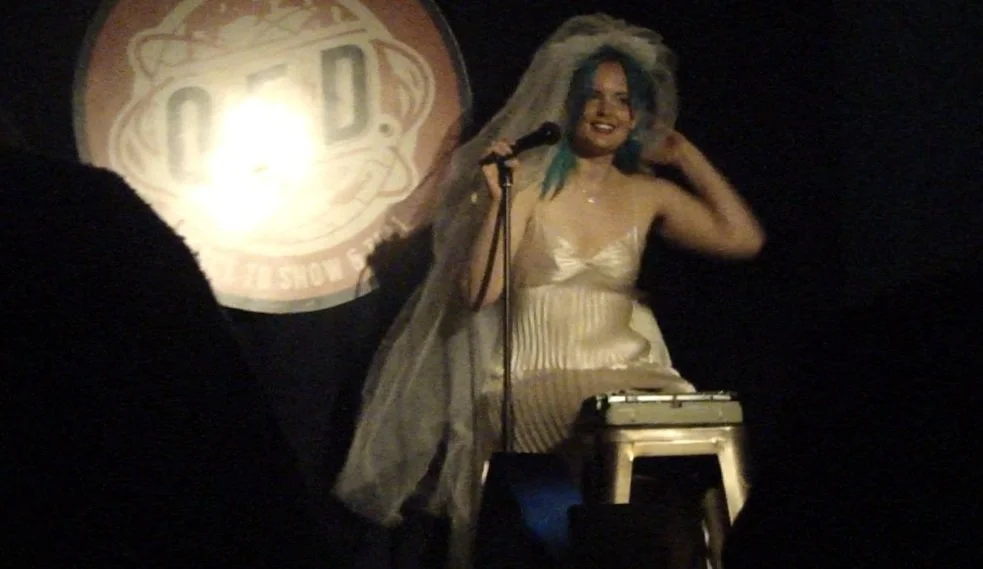
Brooke Finegold “Something Blue” show at Q.E.D.
Source: Caro Barrenechea Cobos
Q.E.D hosts an open mic every week, where anyone can come and share their work, no matter their level of experience.
“There are so many artists that come here, but also just people with completely different daytime jobs that want to tap into their art,” she says. “They come here, [a place where] they can actually be themselves.”
I grab my beer, cozy up at a corner table with two strangers, and enjoy Brooke’s hilarious “Something Blue” set. When the show is over, not ready to say goodbye to the night, a couple of us decide to get to know each other by sharing another round.
We recreate the 1900’s artist ambiance, where the lost generation attended salons to “find not just a safe haven to be weird, but a temple for friendship,” according to Barney. A place where they could connect with other people who didn’t fit into social norms and be free to share their queer interests. The modern reinvention of literary salons creates a comfortable atmosphere where artists can meet each other and feel comfortable showing part of themselves that might not be appreciated the same elsewhere.
Brooke expresses a similar sentiment.
“I mean, I think it can be such a big city obviously, so it is very nice to find your niche,” she says. “It feels very good to find a space where there are other weird art gay kids who are also looking for the weird art gay kids, you know?”
“It's really sweet to feel like I have been a part of creating that community for other people as well as myself,” she adds.
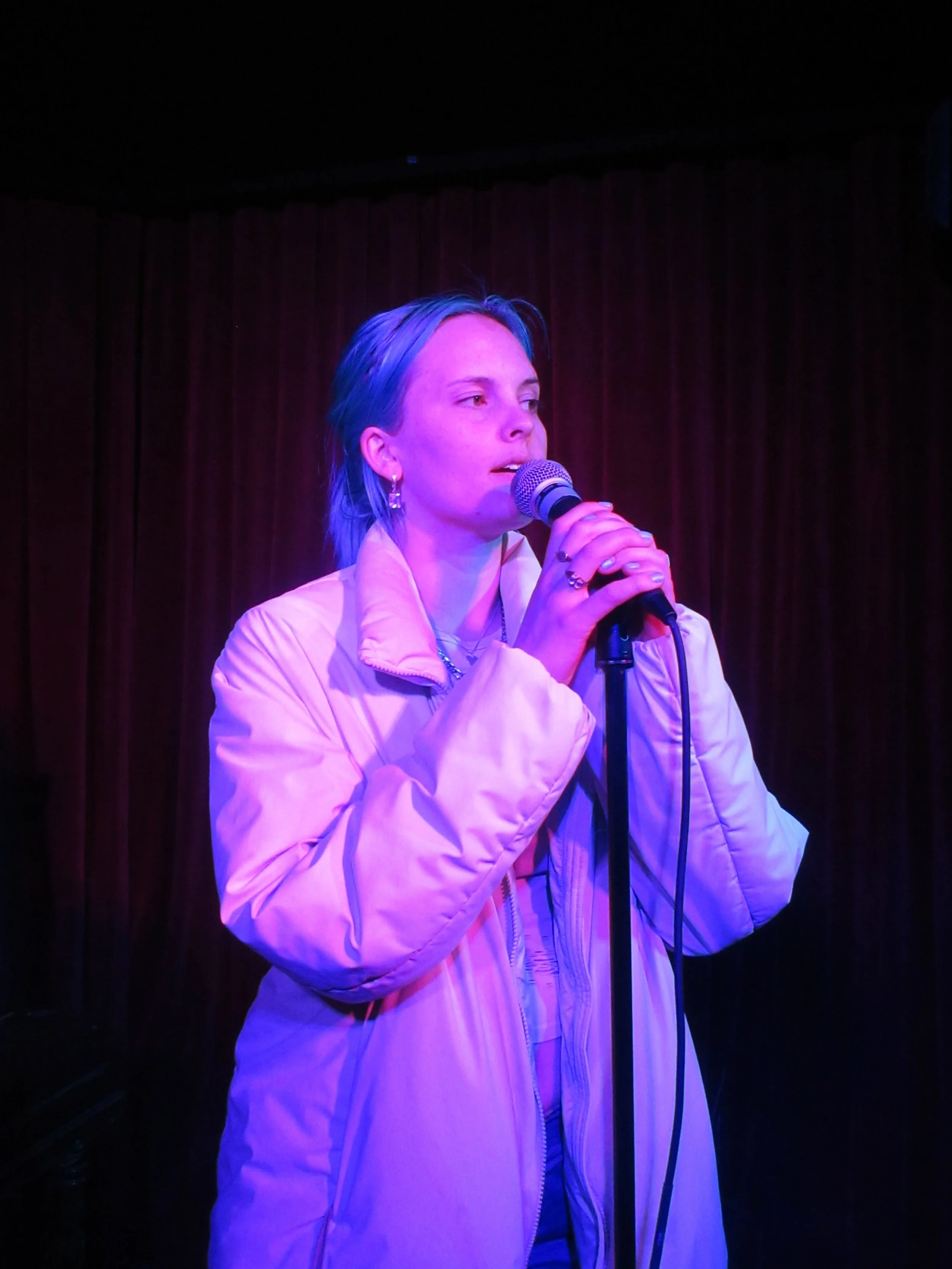
Brooke Finegold at KGB bar open mic
Source: Violeta Romanyuk
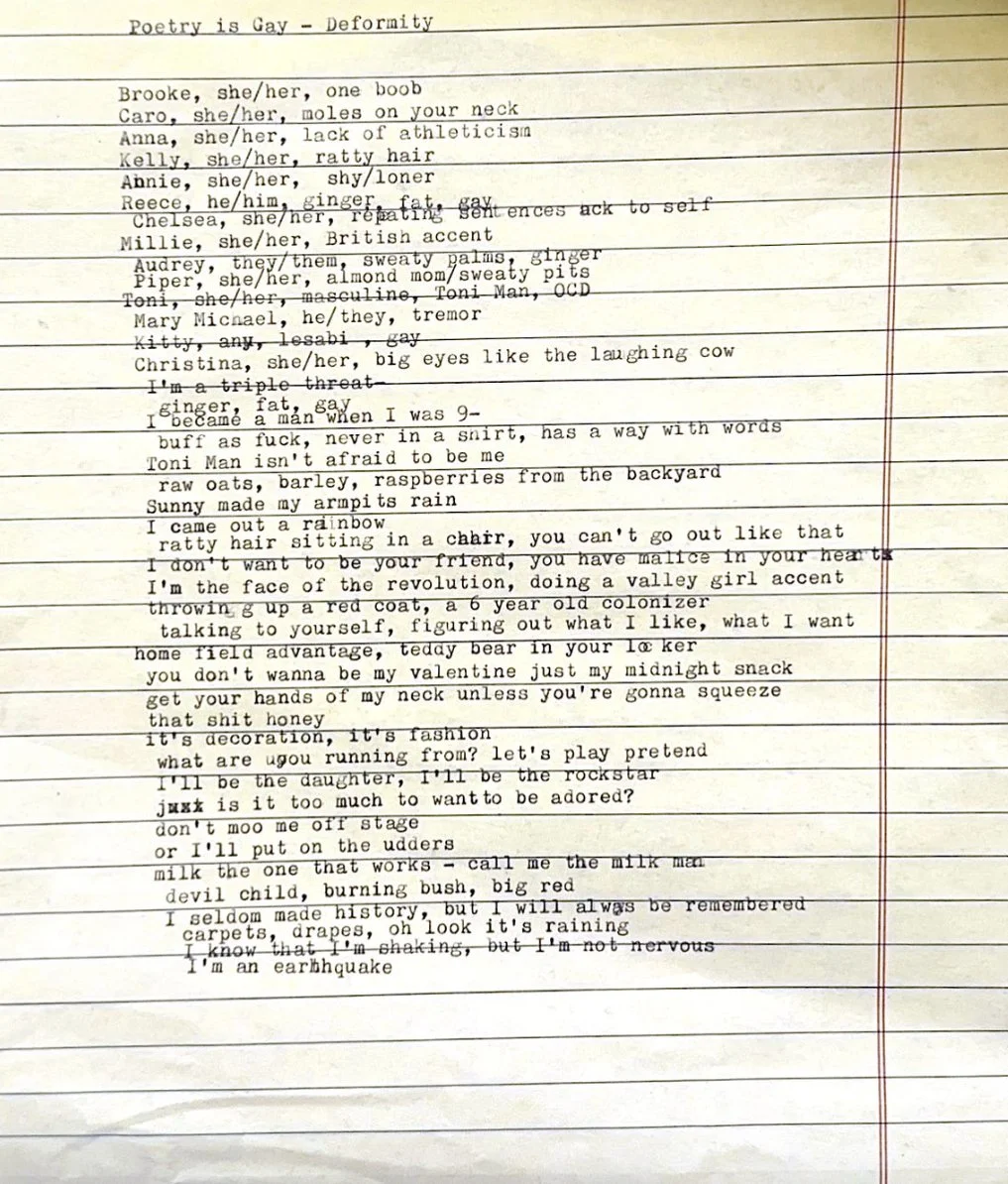
When Brooke first got to the city eight years ago, she attended a lot of open mics where she met some of her closest friends, but sometimes it felt like there was a prize to be won or a social climb that made it challenging to create real connection. She confesses that this was the main reason for starting her salon, “Poetry is Gay.”
“I wished there were just some type of way that I could hang out with other artists that did not feel competitive. I created ‘Poetry Is Gay’ so we could hang out as artists where there isn't any pressure to perform or do very well.”
The salon dynamic is to give people 10 minutes to work on a prompt and develop it in any literary way on the spot. Brooke tells me how when people share, “they are always like ‘this isn’t polished, or it isn't done,’ and I'm like, ‘yeah, you wrote it in 10 minutes—of course it is not.’ And that is not what it’s about; it is not about the outcome, it's about the process and creating something.”
Naturally, as soon as I get home, I RSVP for the next “Poetry Is Gay” salon.
The following Monday, I find myself sitting in the back room of a Greenpoint bar, Singer's, surrounded by other queer writers. It is not hard to understand why so many people feel safe while accompanied by their community, even if they just met a couple of hours before.
Not only did I feel like I belonged—I felt motivated to create. Brooke had a similar experience.
“I love the poetry group because it is so inspiring to see somebody write something in the moment,” she says. “I find that my poetry is always better…It's like we make each other better by being in the same room and sharing together.”
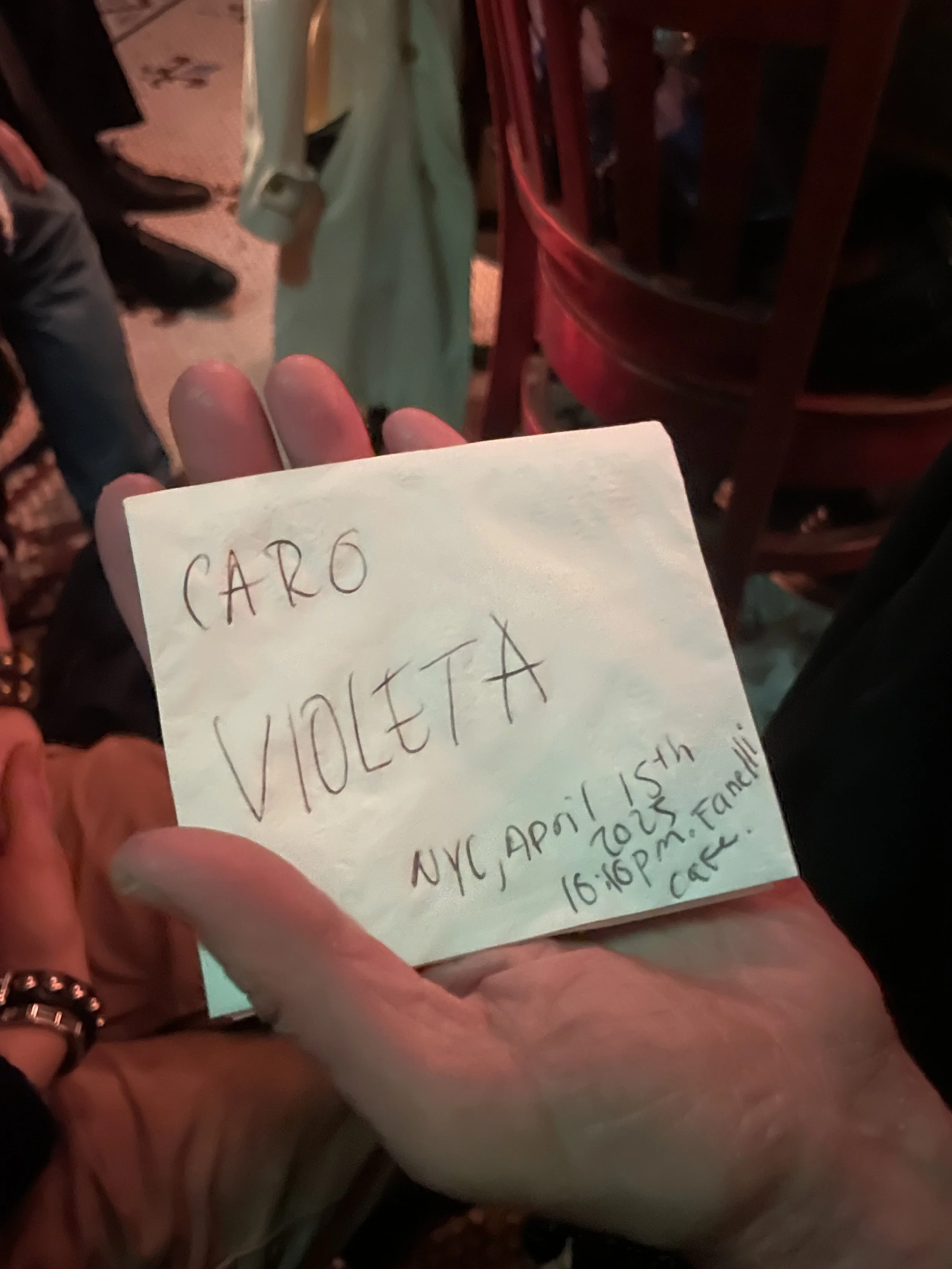
It is the next morning, and I attend school as usual, with no one knowing that just last night, I felt inspired like never before. Trying to recreate the feeling, I recruit my friend Violeta for the night, and we head downtown to a New York staple, Fanelli’s Cafe.
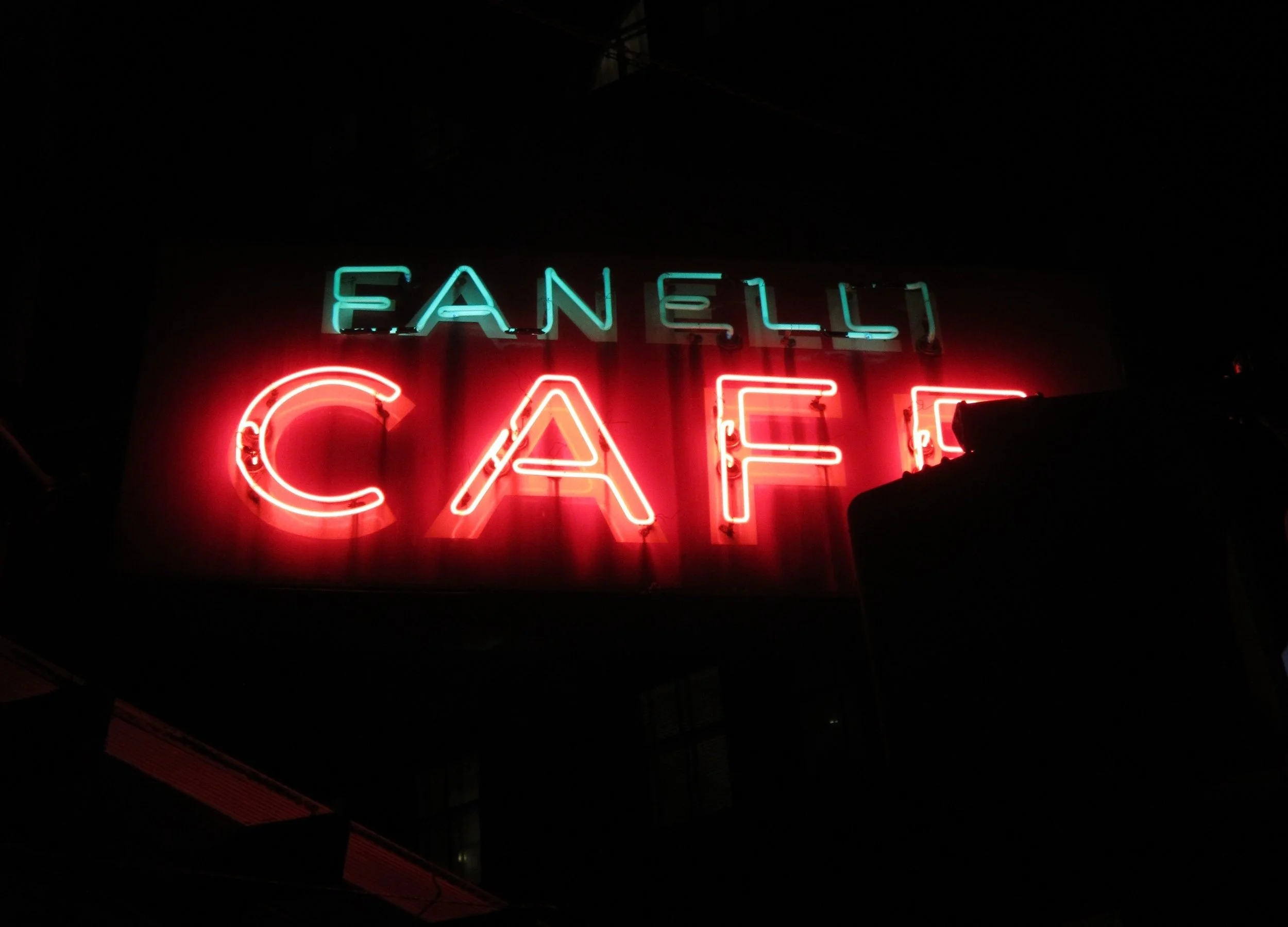
Fanelli Cafe sign at night
Source: Violeta Romanyuk
As we pass through the door, I am welcomed with a just-poured draft beer by the amazing bartender. We sit in the warmest corner of the bar (we are actually sitting on the heater, and I can’t stop sweating) and start a conversation with a very interesting man: Jay Kelly, a sculptor and regular of the bar since the ‘80s.
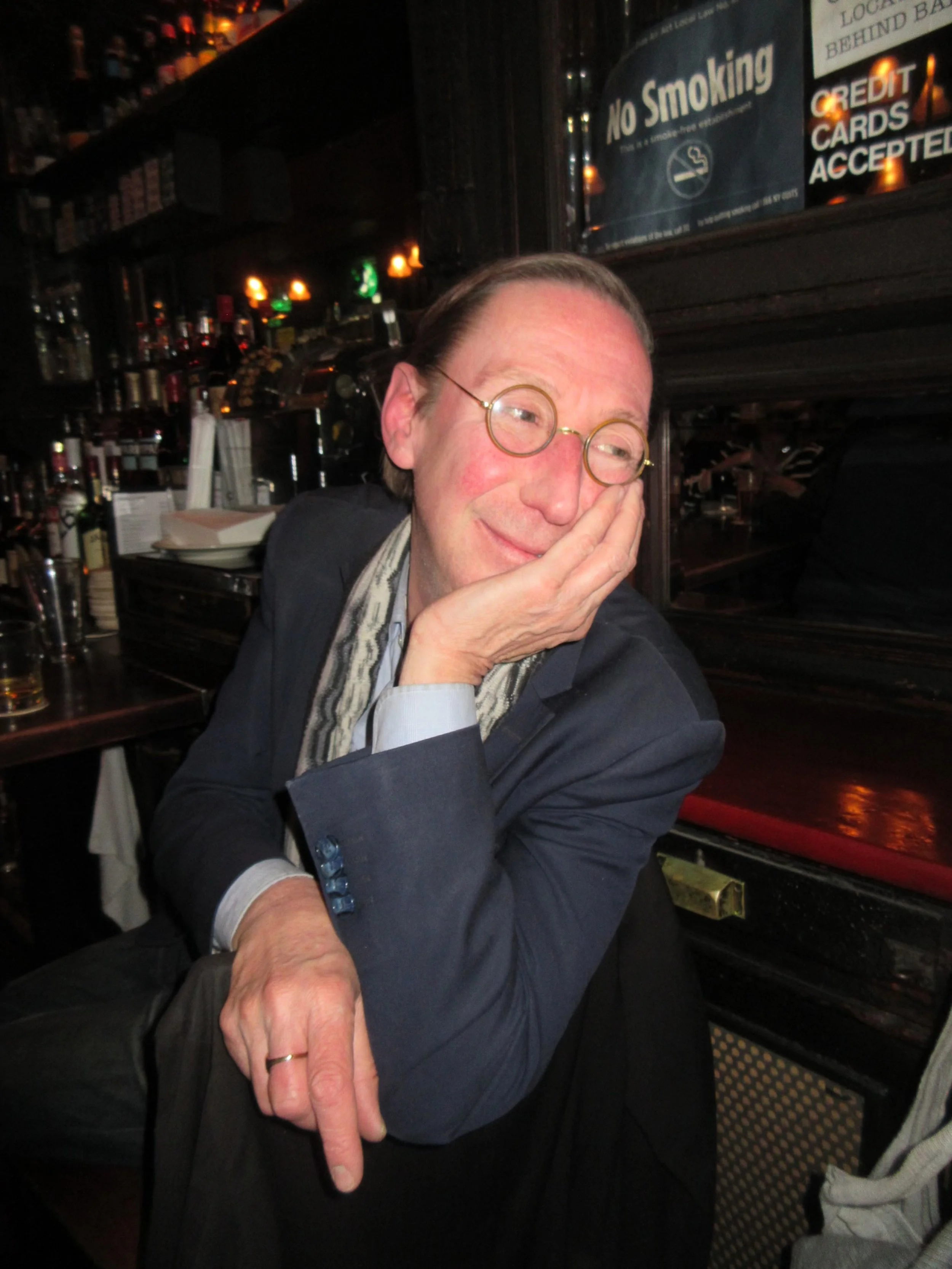
Jay Kelly at Fanelli Cafe
Source: Violeta Romanyuk
We find ourselves trapped between stories of what his life used to be like—when he was in his 20s living as an artist in New York in the 80s—for the rest of the night. The most fascinating tales about all the people he worked with and all the art he created and sold—which I will not be re-telling because some conversations are meant to be shared and kept at the sticky bar. However, he did offer some memorable advice: “It is all about timing. If someone gives you an opportunity, take it, and don’t f*ck it up.”
We sleep only two hours, and we have blisters on our feet, but KGB is hosting their monthly Wednesday open mic, so we take the 6 train to Astor Place and rediscover our place on the barstools.
KGB bar is an iconic place in New York, charged with decades of history. Every Monday night, John Deming organizes a free-entry poetry night at the bar, where three published poets share their work for 15 minutes. Deming explains how, “So much of an artist's job is solitary activities (especially for writers and poets), so they have to go out and find human connection,” and KGB provides the perfect atmosphere for that.
Twice a year, KGB hosts a poetry competition open to the public. Dozens of people fill the second floor of the bar and fill every corner of the red room. For the following three hours—whether you want to showcase your work or simply meet new and inspirational voices—everyone collectively admires each other in awe and curates an irreplaceable experience.
The winner of the open mic gets to add themselves to any Monday night bill the following season, according to Deming.
“It creates this sense of… not really competition, or if there is, it’s healthy,” he says. “It’s a community where people encourage each other. They push each other in a healthy environment.”
The current revival of literary salons has reinvented and positioned itself in third-spaces that prioritize being in the moment and growing as a group.
“Now more than ever—not only with all the political stuff happening but also with all the time we spend behind our phones—a real, actual human connection is so important. And artists have always thrived in it.”
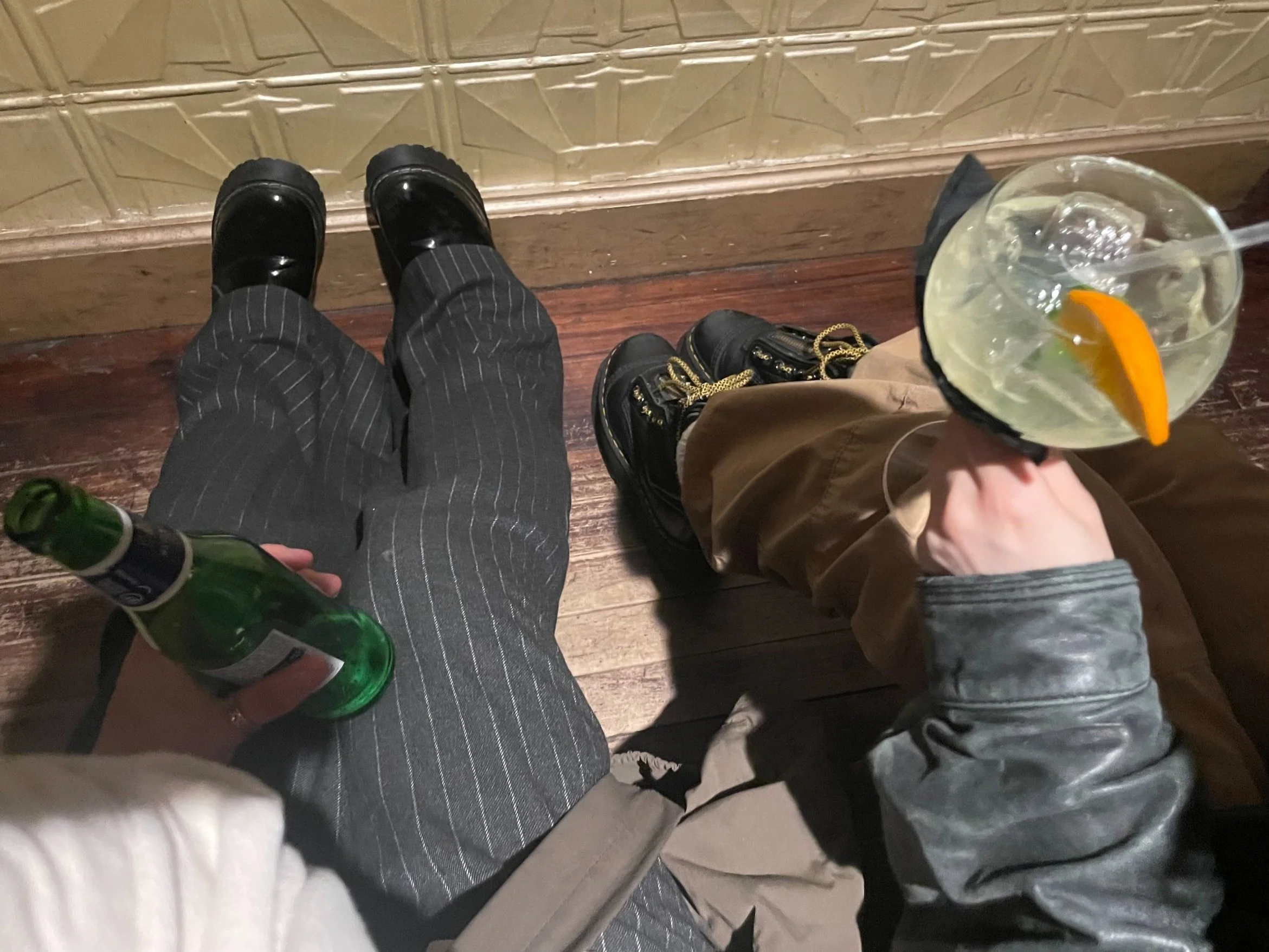
Violeta and I sitting on the floor of KGB bar
Source: Caro Barrenechea Cobos
Violeta and I are sitting on the floor, with a beer in hand and our heads on the empty bathtub that decorates KGB’s third floor. We listen as dozens of poets walk themselves to the stage and bravely present their work for three minutes. Completely sleep deprived, we decide to get $1 pizza slices (that naturally are no longer $1, but $1.50) before we call it a night.
Sitting on the plastic table while I devour a greasy cheese slice, I think about how I met all these artists and discovered all these places because I decided to attend one poetry night a month ago and talk to the people drinking beer alongside me. A smile comes to my face.
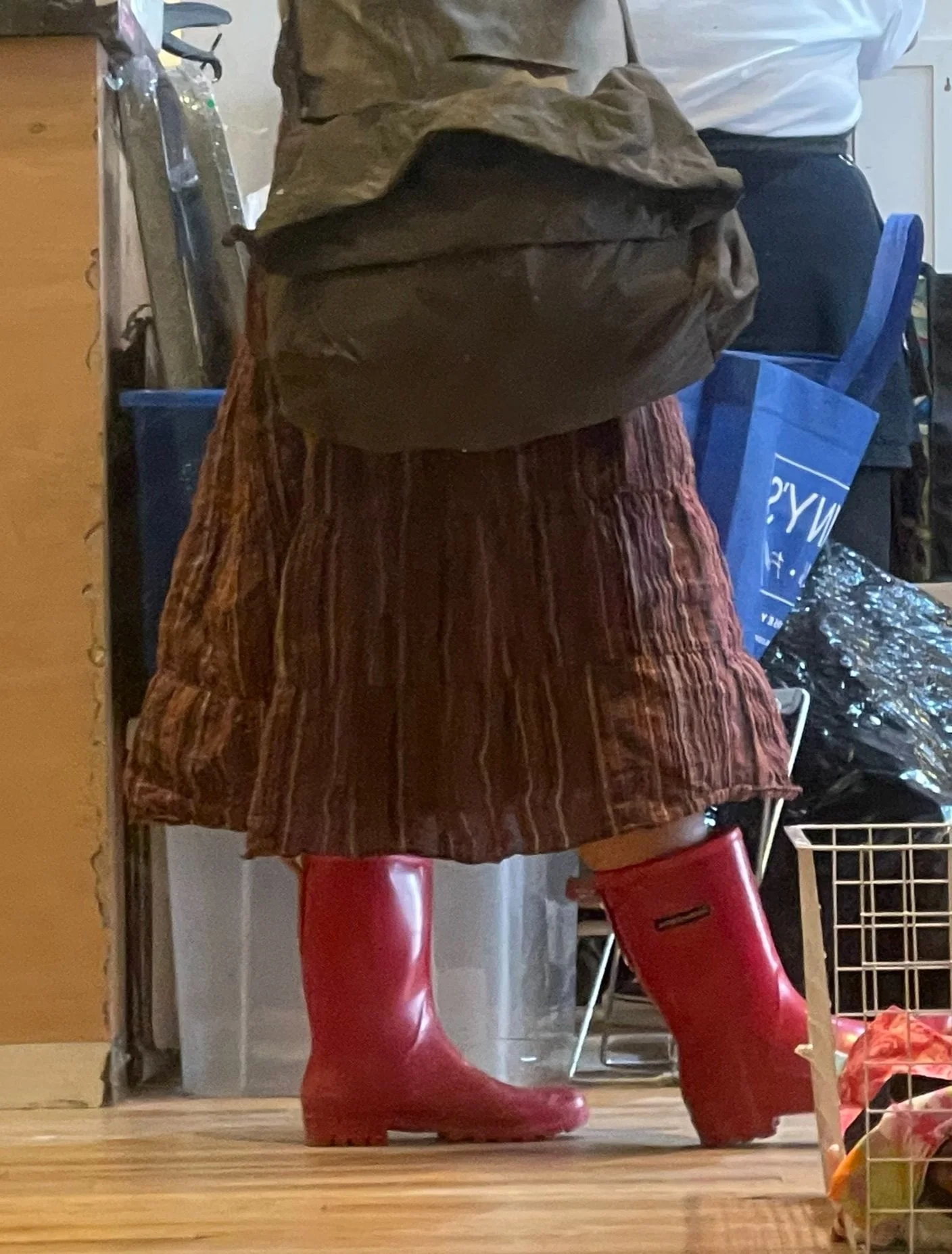
Long skirt and red boots
Source: Caro Barrenechea Cobos
I get ready again—long skirt, red rain boots—New York is getting warm once more, at least most of the days. I’m back at Double Down Saloon with Alexa and the Australian guy. It is 1:29 a.m. on what started as a Monday but is now a Tuesday, and the bartenders already know us by name.
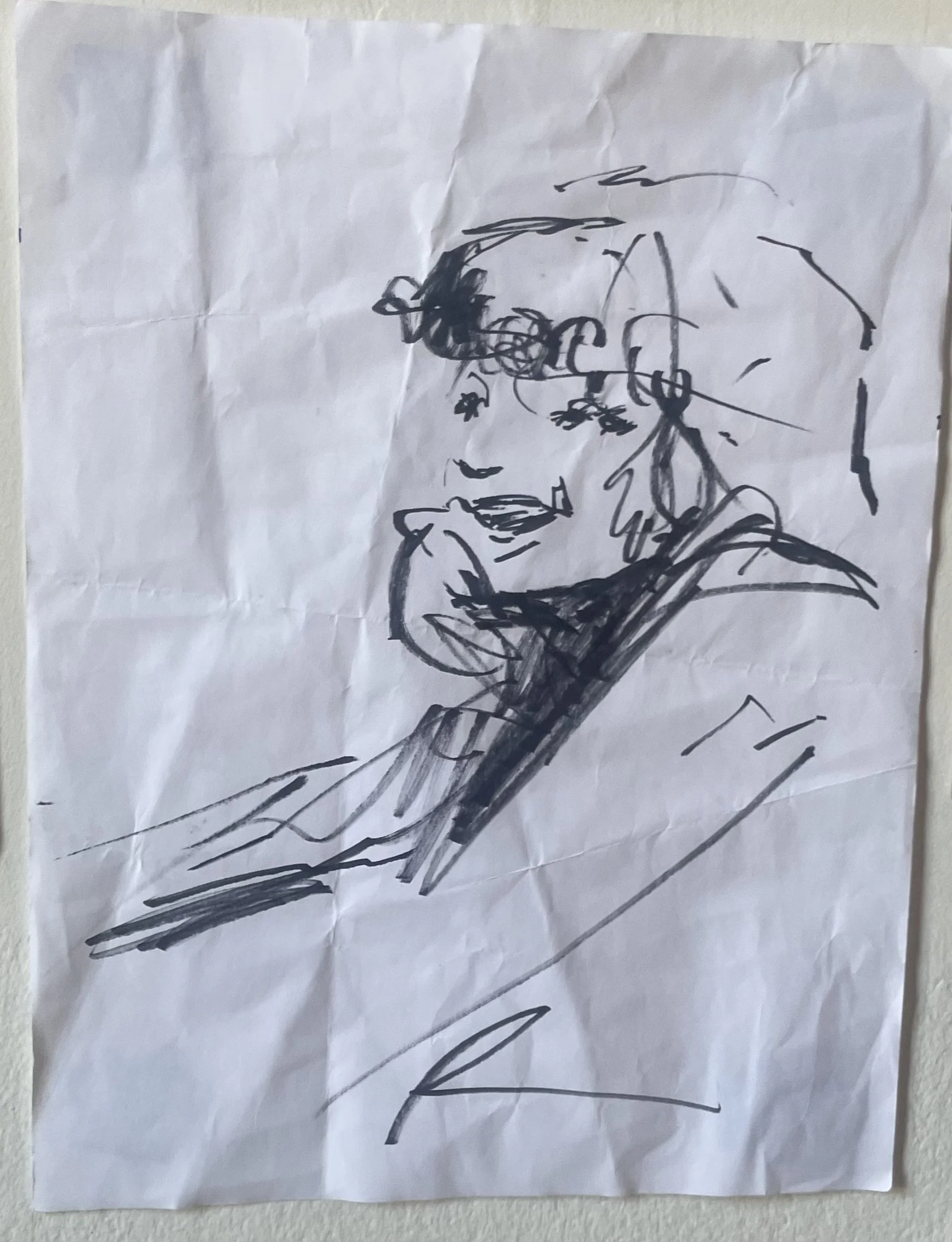
I look at the graffiti-covered walls with the crazy drinks invented by the house hanging from signs, and just under them, I spot a man spread over the counter with a sharpie in hand and about 50 white loose sheets of paper surrounding him. Without talking to anybody, he frantically draws over this paper—half of them already contain some kind of doodle.
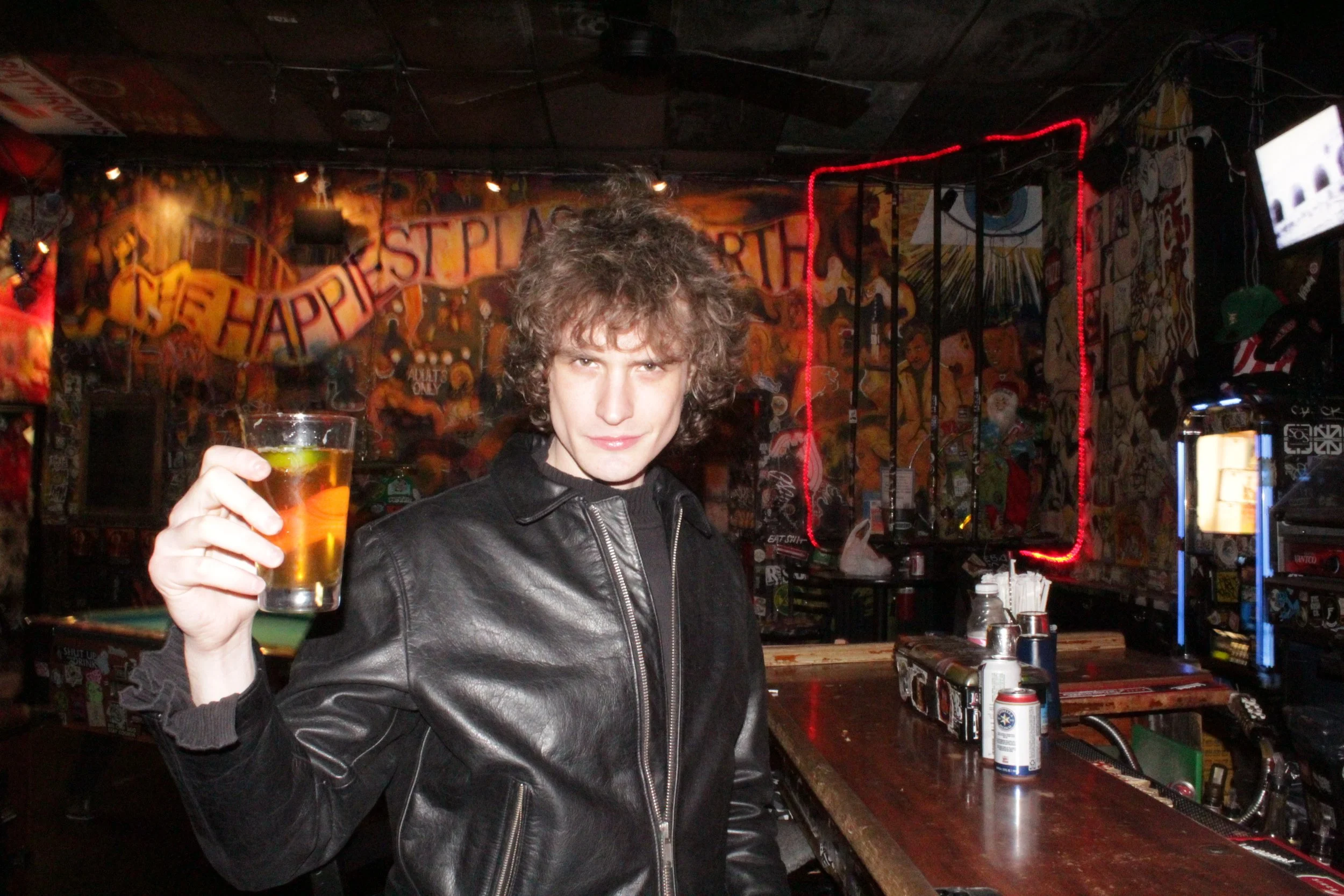
Australian guy at Double Down Saloon
Source: Caro Barrenechea Cobos
If it wasn’t obvious by now, I am always looking for other artists to connect with, so it takes us no time before we are silently drawing next to him. The bartender comes to check on us, and, confused by our quietness and concentration, says, “Wow! This man just turned this whole bar into an art class at 2 a.m.”
And that is the beauty of art, that is the beauty of New York, and that is the beauty of strangers that make you feel like home. I leave the bar with a custom portrait that now hangs on my wall. I pay him back with a poem by the title “The Type of Human You Dream of Moving to New York for.”
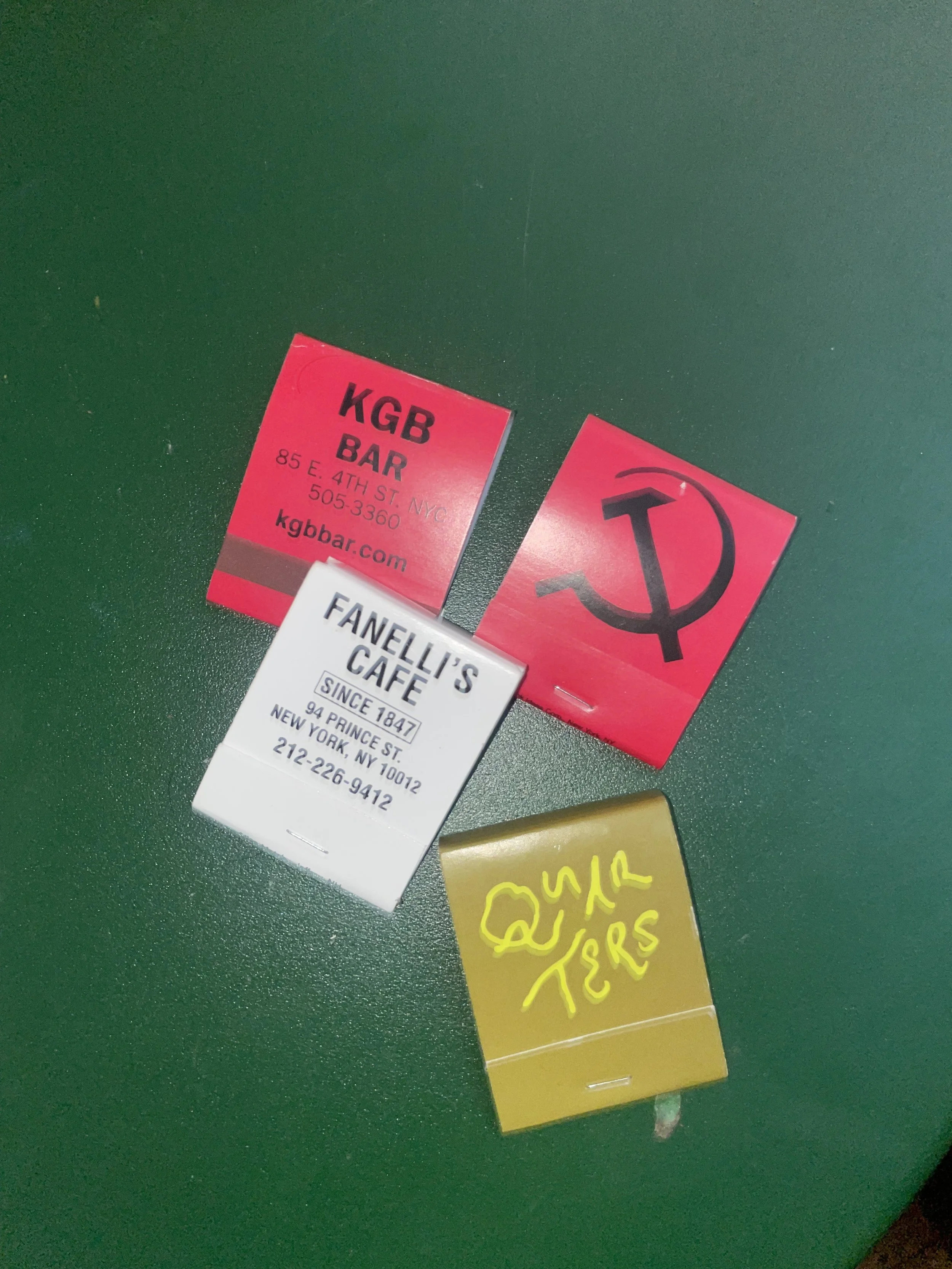
souvenirs from my nights at nyc underground art scene: