
Are Extreme Sports Too Extreme?
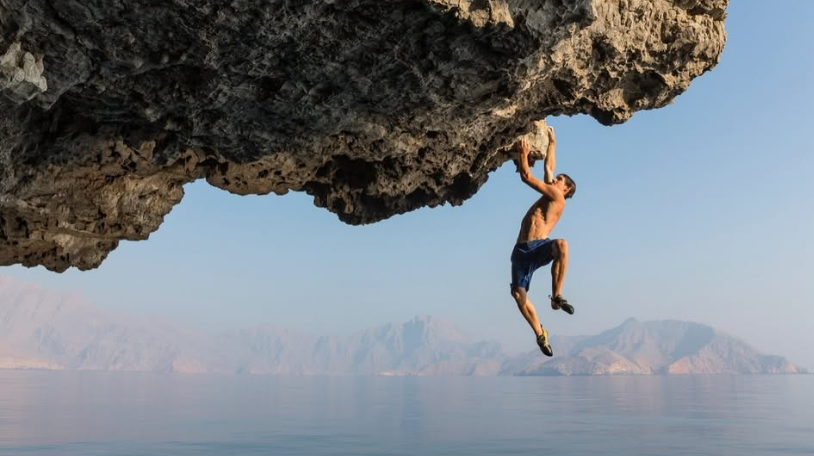
Free solo climbing is an example of sports turning from recreation to risk-taking. To extreme athletes, the prize could be more than a trophy: it could be survival. At what point should the media stop entertaining this form of entertainment?
Source: Instagram
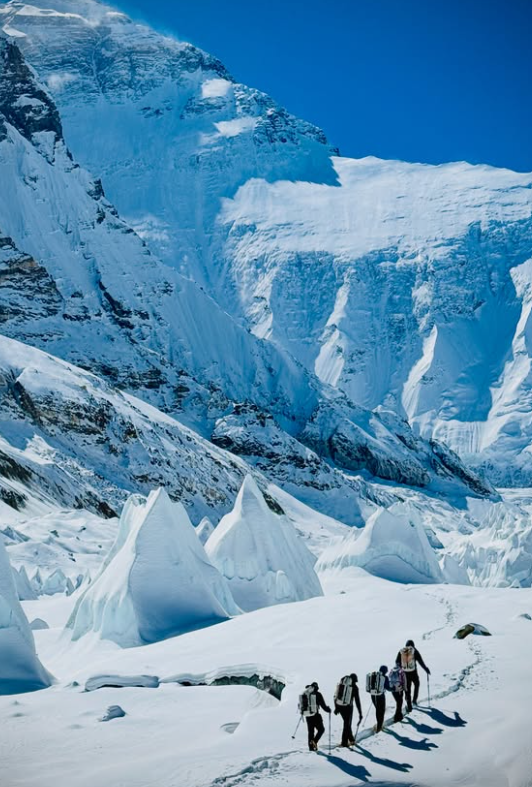
"Everest: The Other Side" was released on Oct. 30 2026. The documentary explored the reality of summiting Mount Everest. Waiting for my train, I overheard two girls watching the trailer, leading them to discuss why people would participate in extreme sports.
"You have to be extremely selfish to do something like this... or just stupid," said one of the girls.
Source: Instagram
Extreme athletes have built a reputation in the public’s eyes as being daredevils. The term "daredevil" evolved throughout the 1900s, associated with stunt performers participating in high-risk activities, often carelessly. Individuals attempting to reach the top of Mount Everest are among the athletes upholding the daredevil title, as they brave the icy peak, knowing the risk.
The government of Nepal eventually enforced bans on climbing Mount Everest due to high fatality rates. This was met with backlash from climbers such as mountaineer Hari Budha Magar: "I will be climbing Mt. Everest whatever the cabinet decides. Nothing Is Impossible." It’s not that the climb is impossible. It’s that death, for even the most experienced climbers, is entirely possible.
With every new summit, dangers increase as people attempt to push the boundaries of human capability, contributing to the stigma that extreme athletes are careless.
For free soloist Alex Honnold, his audience reacts similarly. Free solo climbing involves ascending summits without the use of a harness or rope. In 2026, Netflix aired "Skyscraper Live," documenting Honnold's 1,667-foot climb up the exterior of Taipei 101. Leaving viewers on the edge of their seats, Honnold scaled one of the tallest buildings in under two hours without any equipment. The broadcast was livestreamed with a mild delay, in case if his climb went wrong.
Netflix factored in a delay to the taping in case of a fall, knowing it was too high for a climber to survive if Honnold were to slip. This brought more attention to the ethics of whether extreme sports should continue to be promoted as a form of entertainment.
Critics commented on the fact that not only is he putting his life at risk, but he has a wife and kids who rely on him as well. These factors made the event quite controversial.
Most injuries involved in free solo climbing are due to falls from high elevations, causing head trauma, fractures, or even death. For this reason, many insurance companies will automatically deny coverage related to free solo climbing in standard policies.
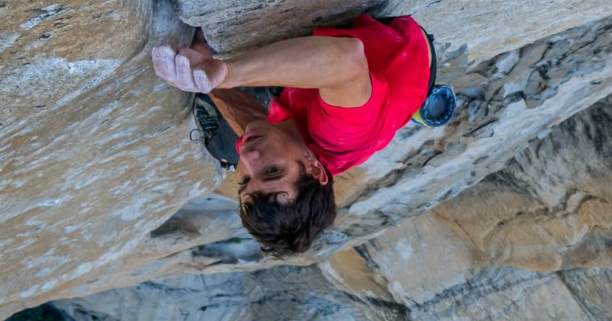
Many people view Honnold as an adrenaline-or attention-seeking athlete. But to Honnold, this climb was not an extreme task. Prior to the Taipei climb, Honnold was centered in the documentary "Free Solo," preparing for a climb up the 3000-foot summit, El Capitan. This included 10 years of training, in which two years were specifically spent practicing the movements of the route.
"If I honestly didn't care then I wouldn't do any practice. I wouldn't prep. I wouldn't train. I would just show up and be like screw it. You know, if it works out, it works out. You actually don't want to die," said Honnold.
Every day he trains, building up the muscles needed for free solo climbs. Another blog-writer claimed that Honnold "must be a daredevil or adrenaline junkie." But when Honnold is climbing, he is not getting the rush that some may assume.
Source: Instagram
Dr. Jane Joseph, a professor at the Medical University of South Carolina, conducted research on Honnold's brain to see how he responds to stimuli by examining the amygdala. This is the part of the brain that fires when the body detects threats, triggering physical or mental reactions. He showed less response than comparable scans, when exposed to triggers.
Dr Sharot, a cognitive neuroscientist, commented on the results, stating, "It seems perfectly reasonable that his amygdala will show less activation than the average brain. How active your amygdala is is partially a result of genetics, but it is also associated with experience."
Source: Instagram
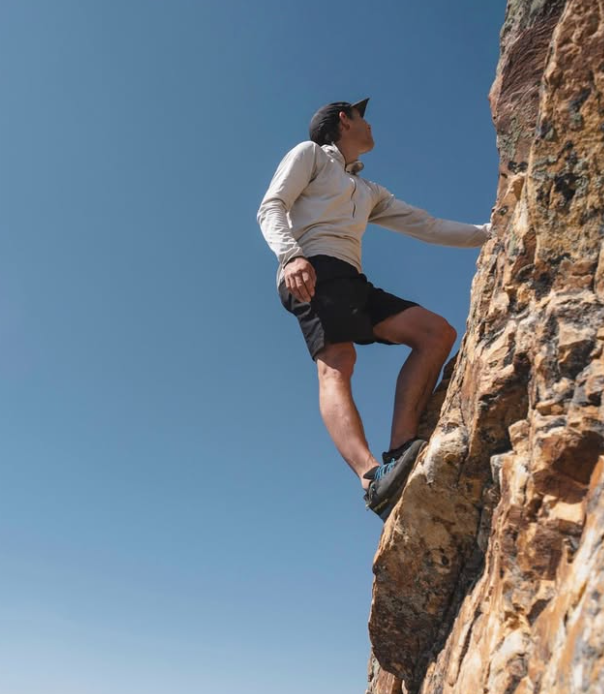
By training physically, Honnold was able to also train his mind to remain calm when attempting large climbs. Many extreme athletes have similar brain patterns, proving they are not daredevils, but determined. With each movement up the summit, Honnold had a carefully planned road map of what he was doing. He was anything but stupid or selfish.
Dr. Eric Brymer, a professor at Queensland University of Technology in Australia claimed extreme athletes are "highly trained individuals with a deep knowledge of themselves, the activity and the environment who do it to have an experience that is life-enhancing and life-changing.”
Extreme sports come with high risks, but the reward is unlocking the ability to contribute to something bigger than yourself.
In 1978, climbing Mount Everest without supplemental oxygen was deemed "scientifically impossible" due to the altitude. In 1980, Reinhold Messner and Peter Habeler achieved this feat against those odds. They did not accomplish this because they were careless. Both men had a passion and had been climbing for decades. They proved that it doesn’t take a daredevil to go to the extreme; sometimes it just takes a dream.
Humans do not yet know the limit of our strengths. Athletes like Honnold use their platform to show that intimidation may limit what people feel is acceptable. He uses his passion as motivation to train everyday. While he is the only person to free solo El Capitan, he is inspiring others to put in the work required to push boundaries, contributing to what society is capable of.
According to Merriam-Webster, the definition of extreme is "exceeding the ordinary, usual, or unexpected." Everything comes with risk, but going beyond normal limits is what allows a person to evolve. Sports will never be too extreme if there is someone willing to put in enough effort to accomplish something deemed impossible.
What do you think about extreme sports? Leave a comment below.