
Runners Recap
Source: Instagram
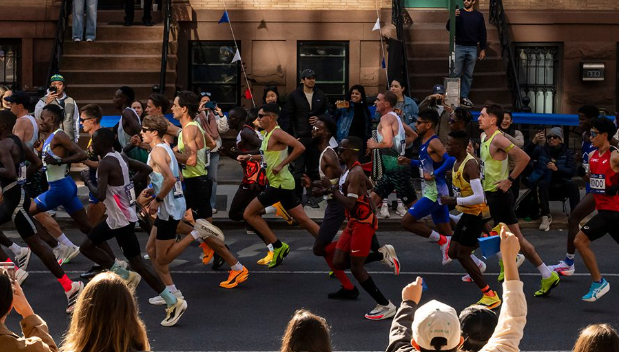
Every year, the New York City Marathon celebrates thousands of people who turn a challenge into an accomplishment.
Runners High-Lights
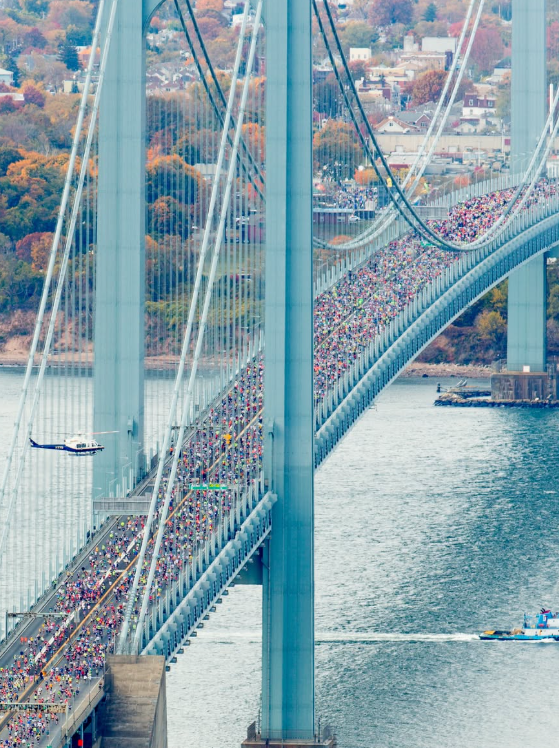
In 1970, the New York City Marathon started by circling Central Park with 55 total finishers. For the 2026 New York Marathon, over 240,000 people from more than 160 countries registered to join, setting a record for the greatest number of applicants ever. Out of all the applications, 61,062 people were chosen to race the 26.2-mile course.
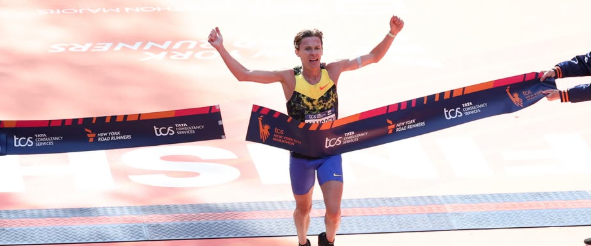
On November 1, 2026, runners started in Staten Island, and made their way to the finish line in Central Park. Completing the course in just over two hours, Andreas Almgran claimed the top spot. It was his first time racing a marathon, and he was one of six people to finish in under two hours and seven minutes. Not far behind at a time of 2:24:36, Sheila Chepkirui took first place in the women's division, executing her second win.
Switzerland dominated the wheelchair division in both the men's and women's races. Marcel Hug and Catherine Debrunner both finished in under two hours. Catherine, over eight minutes ahead of the second-place winner, upheld her title as the fastest woman to complete a marathon in a wheelchair. The men's division, however, had a difference of one second between first and second place. After being close to one another all race, both men sprinted the final mile, making it a near tie.
Source: Instagram
While the first-place winners accomplished astonishing paces under five minutes a mile, the last person to cross the finish line was just as important. James Thomas began racing in the NYC Marathon in 1980. 2026 marked his 43 race, with crowds still cheering him on until he finished.
From Actors like Jennifer Connoly and Joshua Bassett to Schiaparelli's creative director, Daniel Roseberry, celebrities shared their journeys prepping for the day. While many people recognized their familiar faces, one man's appearance was even more monumental.
Source: Instagram
This year is the 50 anniversary of incorporating all 5 boroughs into the course. 83-year-old Dave Obelkevich has run 116 marathons in his life. This year, he ran his 51 New York City Marathon, making him the only person to have participated in every race since updating the course in 1976.
Everyone who made it to the end, no matter what time, showed how strong they were. While the accomplishments were outstanding, the runners had to have endurance and training to get to that point.
Queensboro Bridge
"The wall" describes the point when racers have lost fuel. In the NYC marathon, participants often refer to Queensboro Bridge as the breaking point. The bridge is an uphill stretch without spectators along the road to cheer. Road Runner data shows that the highest number of runners quit after the bridge. Known as the "dropout zone," mile 18 lies on First Avenue between 96 and 103 street. Over 200 people dropped out at this point during the 2025 marathon, and the science supports why this is deemed the most challenging zone in the race.
The energy to run comes from glycogen stored in the liver and muscles after consuming carbs. According to scienceinsights.org, "most runners carry enough glycogen for about two hours of sustained effort." This means that participants holding an average pace will run low on fuel around the 18-mile mark. Furthermore, runners can experience soreness and fatigue as running over 40,000 steps "creates widespread microscopic damage to muscle fibers."
Marathon runners train for long periods of time to build the muscle fibers and adapt to the conditions their body will face. However, many athletes still experience "the wall," despite the amount of training.
Road Runners coach Steve Mura gave advice on how to push past this period: “Remember your why.” For many runners, their why is feeling the energy from the crowd and the city that makes the event what it is today.
Sign of the Times
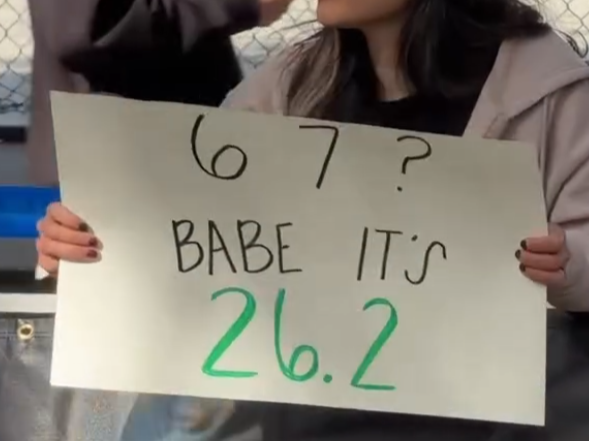
Training is important to build endurance, but runners also need the crowd to push past their limits and go beyond what they think their body is capable of. Athletes’ performances, relating to the crowds, reveal “improvements of up to 7% when athletes receive encouragement from supporters.”
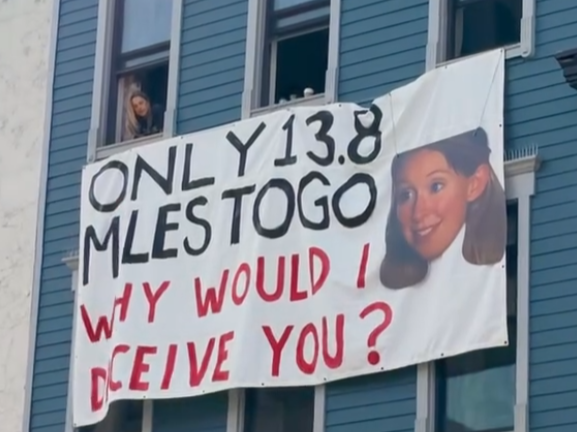
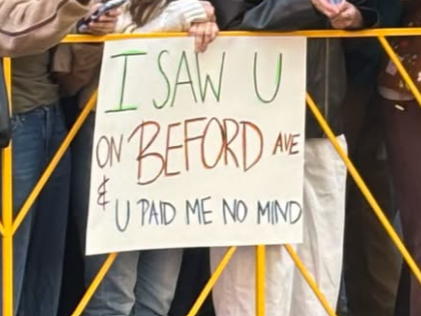
The New York City Marathon reflects all the major moments that brought people together throughout the year. With each mile, there are dozens of spectators holding signs to motivate the runners. They truly represent the sign of the times, as the messages relate to the memes, TV shows, and major moments in current culture. Many signs are catered to the city, reminding participants of their reason to run. That extra support can be the difference that allows runners to find the energy to keep pushing towards the finish line. In the end, everyone receives a medal, allowing them to be a part of the community of other runners who did not let the battles get in the way of their ultimate victory

Source: Instagram
Source: Instagram
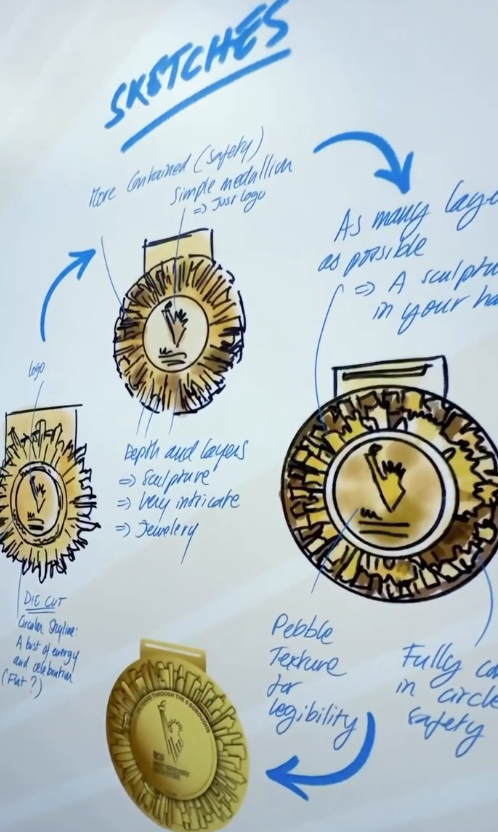
The medals reflected the rich history embedded in the race. The New York Road Runners designed the medal with an abstract shape of the New York Skyline, representing the different stories for everyone who receives one. Thomas Cabus, creative director of NYRR, stated that the theme was "celebration, unity, and elegance."
History and culture are always running through the streets of New York. For 50 years, the New York City Marathon turns what was once a figure of speech into reality as participants journey across the 5-borough course. Racers take part not only for a personal victory, but to come together to celebrate unity. From the first to the last finisher, every racer represented the people who could not compete, the millions of spectators, the dozens of countries that people traveled from, and all of the history that resides along the streets they are running on. With each step, runners are bringing the energy of the city to life by going beyond physical barriers.
Do you think you could run a marathon? Leave a comment below.