
Single in the City
Emotionally subletting to a man who won’t sign the lease.
There is a particular kind of relationship that exists now, one that seems to belong entirely to the era of handheld technology. It is not quite a relationship, but also not its absence.
You begin by thinking it’s only temporary—a result of the distance. Geography has always complicated things. There are flights, trains, and buses between cities, long conversations late at night, and the quiet intimacy of words exchanged across time zones. It can feel almost literary at first, but you justify the stream of texts by saying, “People have always written letters to one another; it’s only natural.” The difference? Letters imply intention.
The messages arrive unpredictably. You might get a string of them one week that are thoughtful and curious, with the suggestion that something could form. Then you’ll get nothing for days, maybe weeks. The silence stretches long enough that you begin to assume the connection dissolved…until the phone lights up again.
“Hey, beautiful/gorgeous/you.”
It’s never framed as a return, because there is never an acknowledgment of absence. The message carries the strange assumption that the conversation, like an unattended apartment, has been waiting.
This is the dynamic that has come to define a certain category of modern attachment: the person who occupies your emotional life without agreeing to live there.
For lack of better terms, an emotional subletter.
In cities like ours, subletting is common. People come and go with half-furnished apartments, unofficial leases, and arrangements flexible enough to dissolve without much consequence. Relationships are starting to seem like they follow the same logic.
No one wants to close off possibilities, they want to “keep their options open.” It postures the illusion of free will and self-respect to choose flexibility. And in theory, it does. Choice suggests freedom and freedom suggests honesty.
But there is a difference between having options and using someone as one.
Andrea Meltzer, Social Psychology Area Director and professor at Florida State University, justifies the appeal of a situationship.
“Situationships can offer people many of the benefits of more committed relationships. They provide companionship, intimacy, and emotional and physical support,” Meltzer said. “Nevertheless, there is a growing literature demonstrating that such situationships are less satisfying than relationships characterized by more commitment.”
You notice that the connection reactivates at particular moments; oftentimes, in the late evening and on weekends that appear otherwise unoccupied. Your presence in this person’s life expands and contracts according to circumstances that remain invisible to you.
You become, effectively, a contingency.
The messages continue, and they even feel sincere, but it’s easy for the controlling force in this duo to come off as genuine when their presence is scarce.
Sincerity does not necessarily equal consistency, and consistency is the element that transforms an interaction into a relationship. Without it, the exchange begins to resemble basic correspondence. Pen pals, but without the romance of envelopes or stamps.
After all, the conversations can be engaging. There may be humor, curiosity, and flashes of intimacy, and the architecture of a relationship appears to be present, but it is built without any foundation.
Distance is not the problem, but rather inconsistency.
The person who is present only when it suits them creates a particular kind of atmosphere. One begins to anticipate the disappearance even while the conversation is still happening. Absence simply becomes part of the rhythm.
Eventually, you realize that the arrangement resembles something familiar: holding an apartment for someone who never signs the lease, only intermittently walking in and out. They leave traces of themselves, but the space is never fully occupied, and you are never entirely free to offer it to anyone else.
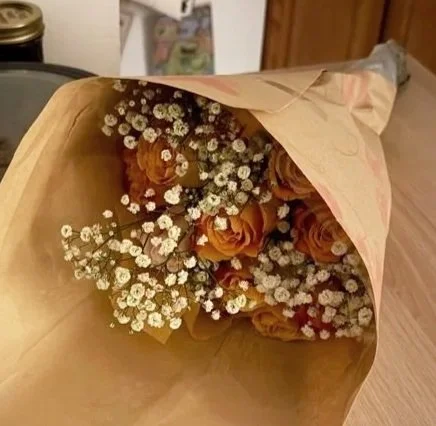
Source: My Ex-Situationship <3
At a certain point, the question becomes unavoidable. Not whether the connection exists—it clearly does in some form—but whether it is being sustained for mutual reasons or merely maintained as an available option. This, more than the distance, reveals the real fatigue of the arrangement.
What begins as openness can easily become a quiet expectation that you will remain accessible, patient, and receptive. This is even as the other person moves freely through other possibilities.
The modern vocabulary frames this as casualness or flexibility with little to no pressure, but the emotional experience of it is more precise.
You begin to feel like you’re no longer a participant, and that realization arrives without physical drama. It is simply the moment when the phone lights up again after a long stretch of silence, and you understand your own expendability.
Now, you think: This is not about distance. This is about convenience.
Once you finally see that, the arrangement becomes difficult to sustain. Because the truth about leases, emotional or otherwise, is that they clarify something essential. They determine who actually lives there and who is passing through.
In a world where everyone is determined to keep their options open, who exactly is still willing to move in?