
Girlhood Painted Blue: A Reflection on Teenage Melancholy
*Article from Lexington Line Spring/Summer 2026 Issue, pages 46-47
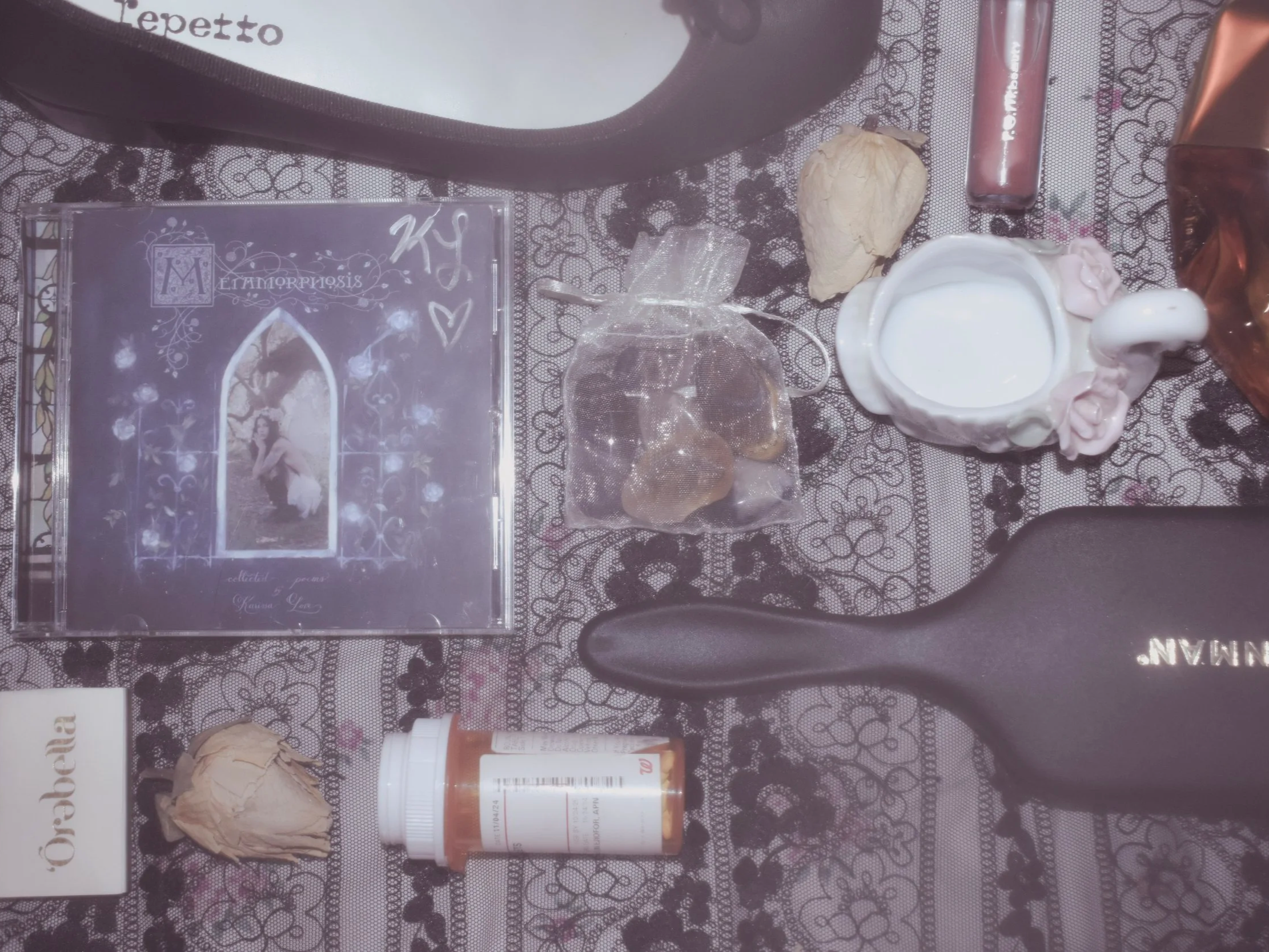
The sad girl: flickering in the blue eyes of Effy Stonem, lingering between the pages of Sylvia Plath’s The Bell Jar, quiet and in her thoughts. Do you know her? Are you her?
Source: Tatiana Colmenares
The sad girl is more than just a figure in the media or an aesthetic to behold. She stands in silent rebellion: we admire this girl, but why?
“More than anything, the sad girl is about a deep internalization of wider systems of oppression,” according to Sophia Brousset, writer for The Saint Newspaper, “and a deep internalization of patriarchy and expectations. Then, when you’re not able to reach those expectations—it manifests within, I think.”
When I got old enough to process the media I was consuming, I felt a pull into the world of sadness. It was what surrounded me the most, so why not indulge? I found it mesmerizing that these pretty girls on my computer screen could feel deep emotions like me, and that I could be one of them.
At age 12, I began feeling impending doom. At age 13, I experienced Skins U.K. Cassie Ainsworth lured me into a trap I had set up for myself at age 14. I turned 15, and the sadness grew; unsurprisingly, at 16, nothing improved. The media that resonated with me was comforting. I didn’t know who I was without this feeling. Maybe I was no one. Maybe I’d always been no one. As you can tell, I was keen on the dramatics back then.
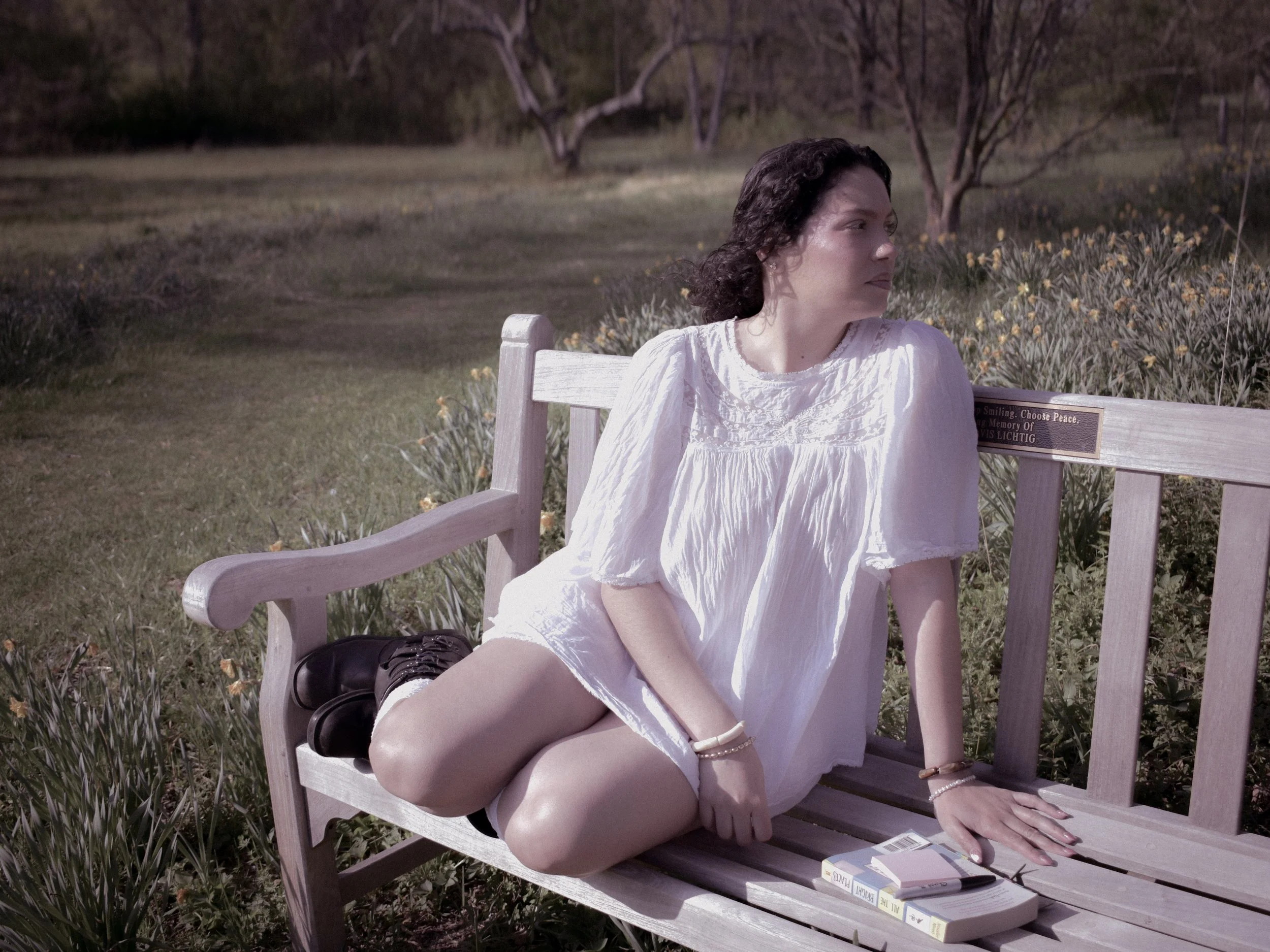
Before my own teen years, I always admired my sister, Brianna. She is six years older than me, and I saw her as the ultimate teenage girl. She also had the best taste in media, like Twilight and Looking for Alaska. It wasn’t my era to look back on, but it served as a kind of North Star.
Source: Tatiana Colmenares
“I think back to the first time I heard ‘Video Games’ by Lana Del Rey,” Brianna recalls. “The way she portrayed sadness and nostalgia was so hauntingly beautiful. It felt like a cultural moment where we were all allowed to embrace our darker emotions.”
Brianna was the Tumblr girl I always envisioned. Her moody smudged eyeliner, her fishnet tights—it felt almost like a protest, but it was a lifestyle.
She remembers how in media like The Virgin Suicides, Thirteen, and Girl, Interrupted, the characters dealt with so much trauma, and it felt relatable. There was an obsession.
I was most enthralled with the aesthetics, because I was joining these communities on Twitter and Tumblr that reflected my deepest emotions. Girls with bruised legs, cherry red lips, disturbing thoughts, and powder pink rooms consumed my feeds and Pinterest boards.
“Seeing these very kind of self-destructive characters, or people who were so—there was no direction,” Brousset says, “but there was an element of, okay, this is something that’s done. That is what your teenage years can look like.”
Source: Tatiana Colmenares
In the article, “The Cult of the Sad Girl,” she writes, “In many ways, once I found something to relate it to, my sadness drove me. It now had a meaning. It made me interesting.”
Brousset’s vulnerability makes me wonder if teenagers are simply destine to feel this way. For most, it’s probably harmless romanticism—but it’s also important not to indulge it too deeply.
“No, what I was seeing was actually more distorted—the world that I was looking at was actually not accurate,” she says. “This kind of really nihilistic view of the world. This view of people is horrible—everything is doomed. It was actually not an accurate picture.”
I guess that is what an influence like this does, doesn’t it?
I just find it less noble. I don’t think it’s necessarily the things that I want to aspire to be,” Brousset says.
Maybe all we ever want as women is to be seen—to have our stories written for us in a way that others can understand, to have our femininity displayed across a screen. At least, that’s how I saw it.
At age 17, I felt my world growing bigger. It was my senior year of high school. I was graduating and embarking on a new life, which would change the girl I was. I turned my life into my very own coming-of-age movie.
Now, at age 21, I sit on my bed with my computer on my lap, wanting nothing more than to talk to that girl. To tell her that this is not the end-all or be-all of her life. That this is just a confusing and overwhelming time.
There are so many feelings and thoughts we go through, and over time, those thoughts and deep emotions develop into who we are as women. And I think eventually, that is a realization that many sad girls come to.