
Sports Induced Misogyny
Last week was the end of the infamous March Madness tournament. To my surprise, March Madness, despite its name, starts during the latter half of the month of March, meaning the final four, or the end of the tournament, lies at the beginning of April.
I happened to be in Indianapolis during the men’s Final Four tournament, and the city was more alive than I’ve ever seen it. Parties, people walking the streets, and even a free three-day music festival filled the city because of some college boys playing basketball.
What some people don’t know is that the women's March Madness final four tournament was also taking place that same weekend in Phoenix. They had the same events, on a much smaller scale; one DJ and artist Kehlani performed on one night, instead of a three-day music festival with performers like Twenty-One Pilots, Dominic Fike, and Post Malone.
Yes, I know this isn’t a groundbreaking idea that women's sports aren't as popular or supported as their male counterparts. However, my perspective on sports has changed immensely.

Source: Me at the free March Madness Dominic Fike concert
My knowledge and access to sports have changed dramatically over the past year since I started dating a straight man. I’m starting to understand it’s not about a ball or a stick, but instead stories, lore, passion, dedication, and so much drama. But to me? These are things for the girls.
I also understand a man’s body is biologically created to be physically able to hit further, run faster, etc. But if the sport is actually about the story rather than the physicality of it, why are we still not engaged in women's sports?
We are currently in the Masters tournament, and while I have found golf to be a new form of meditation, I hate that I have to watch men being explained by men. I asked my boyfriend when we could watch the women's masters. He had to look it up to report to me that it was last weekend. No reporting, no media, no knowledge about it—even from a person who lives, breathes, and bleeds sports.
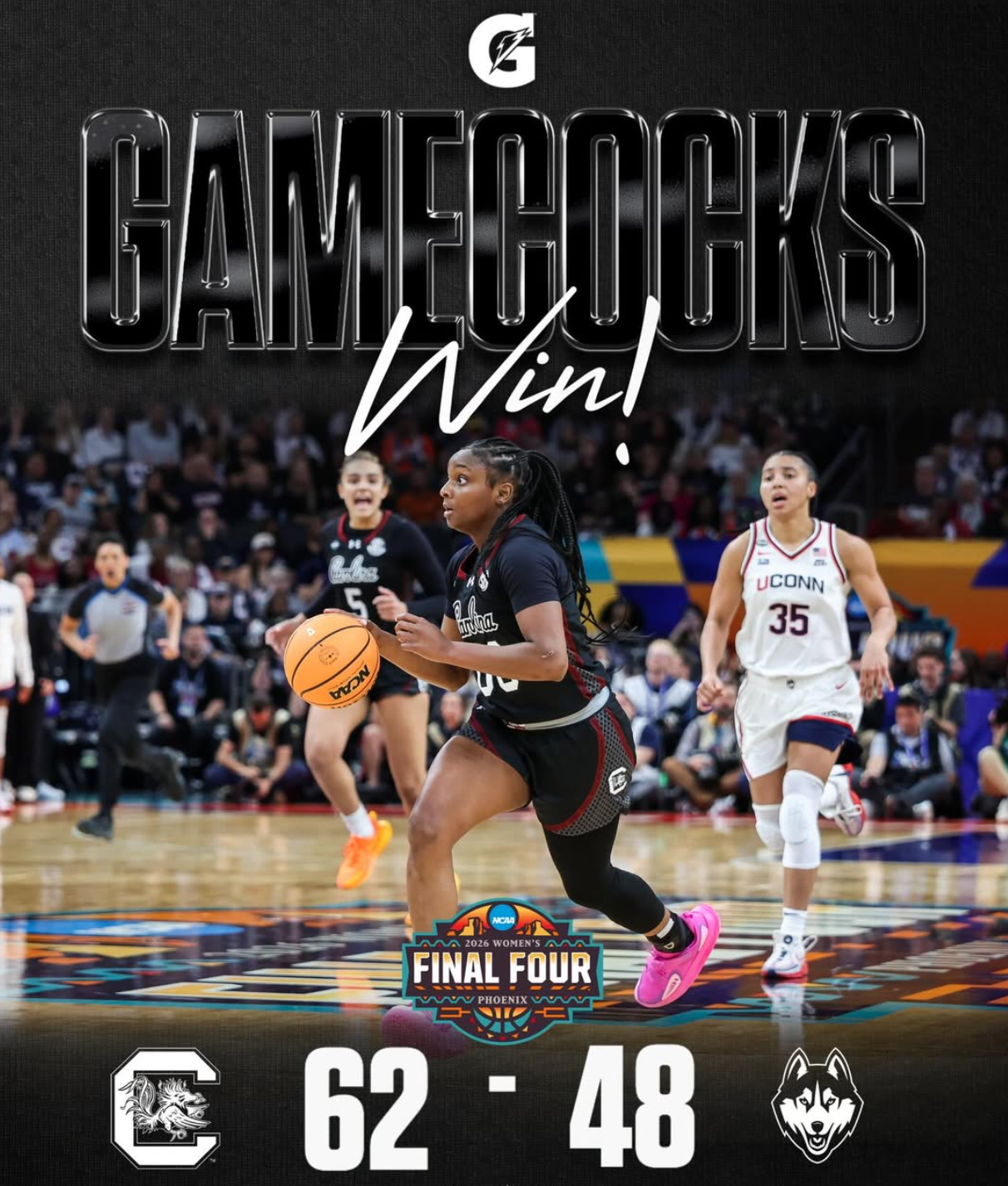
Source: Gamecockwbb
The UConn women's basketball team was fighting for their 13th consecutive win at the tournament this year. They famously just lost their star player, Paige Buckers, to the WNBA, and their coach, Geno Auriemma, announced they could still win without her. He is a man, and they did not.
Geno was reported after losing the final four against South Carolina, when he had some rather unsportsmanlike actions and words toward the opposing coach, Dawn Staley. In his post-game interview, he spoke out about the unfair differences in not only media coverage, but in scheduling women's as opposed to men's March Madness tournament. He opened up about conflicting schedules between team practices and media reporting times.
Media coverage is essential for advertising, which, unfortunately, women’s sports are really lacking right now. A team that has won the national tournament twelve times can’t even get the respect from sports reporters to meet at a normal time—that doesn’t interfere with their training. The fact that Geno is a man reporting on behalf of women’s sports might make his word less credible, but having these conversations is a step in the right direction. Even when started by a man.
The gender war is relentless and even amplified by sports. Should we have a man coaching a woman's team? Because when he gets up in the opposing coach’s face (who’s a woman), there’s a gender-to-gender problem. However, on the other hand, he could be showcasing gender neutrality in a way we’re not used to: by acting the same way he would against a male coach.
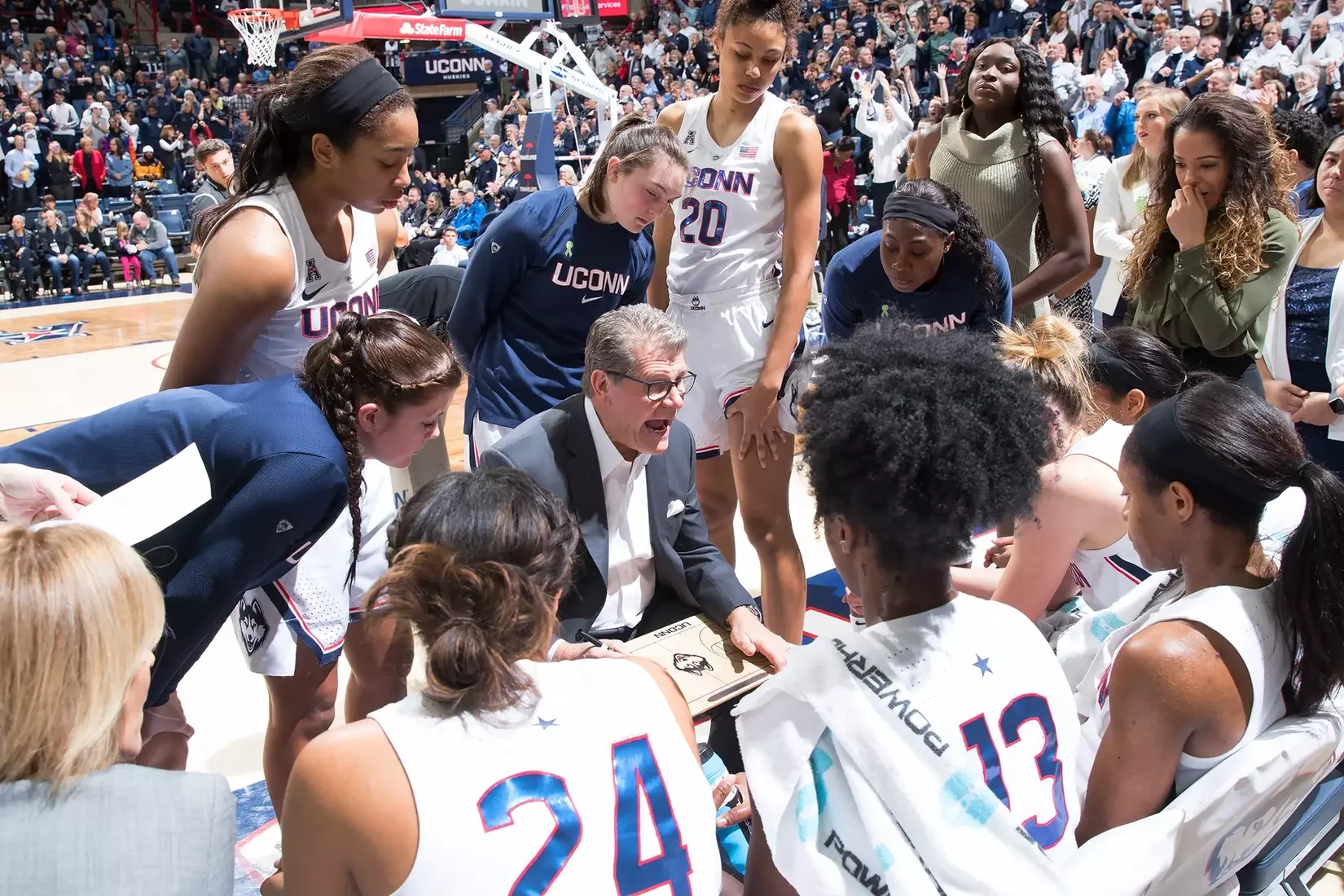
Source: University of Connecticut
It was my first year to ever make a March Madness bracket. That's, of course, a men's March Madness bracket. I had to specify when talking about how my women's bracket was doing vs just my ‘bracket’. I want to watch the women's masters and not just “the masters,” the WNBA and not just the NBA, the WTA (women's tennis association), and not the ATP (association of tennis professionals).
Which leads to a larger question that I feel we aren’t talking about enough. The default for nearly every sport is the assumption that a man is competing, and we have to specify when we're watching a woman compete. Could this be rooted in our innate unconscious misogyny? Or is our innate unconscious misogamy a product of the sports industry?